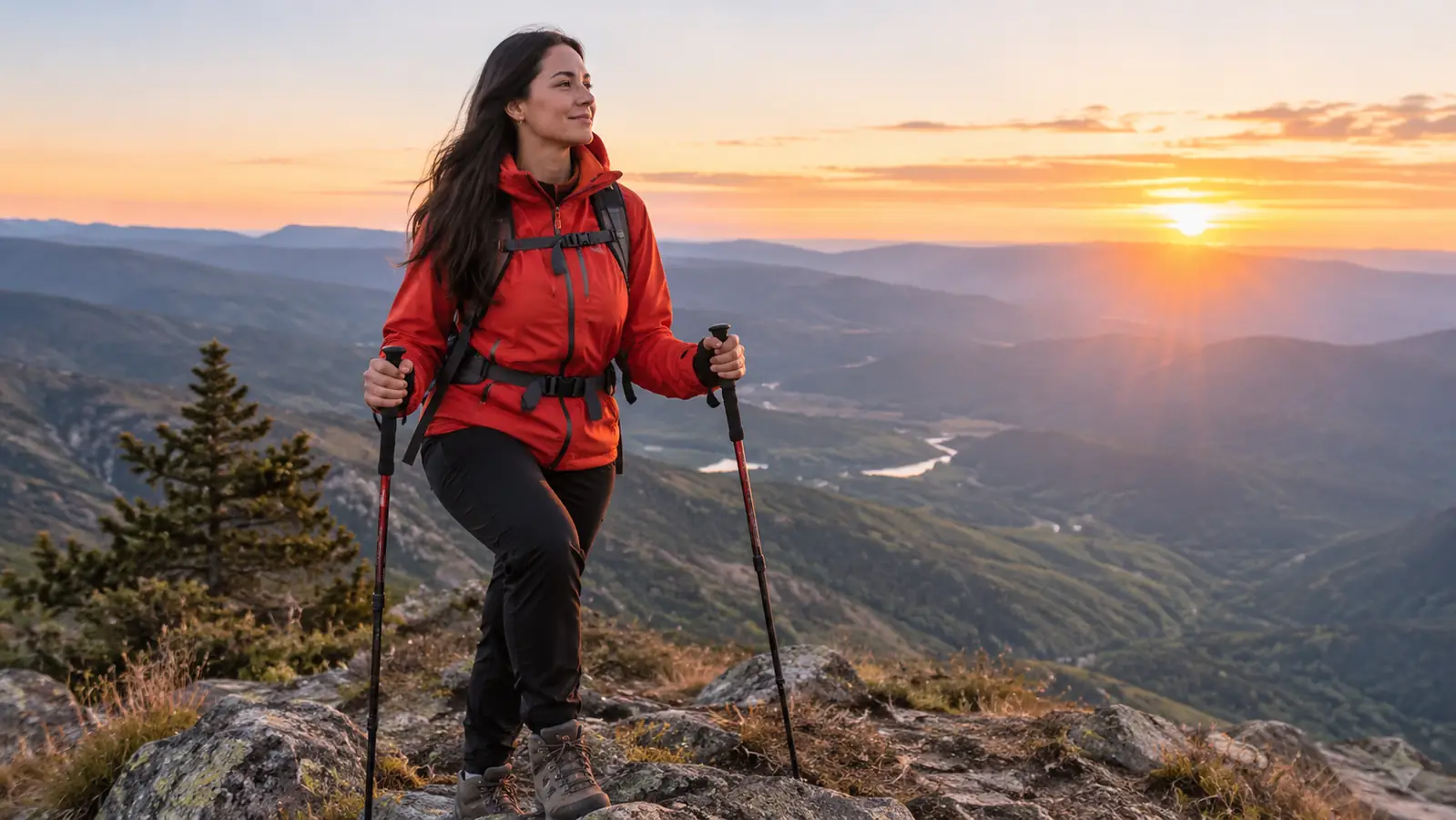
I bought the Black Diamond Trail poles in the first week of April, and I bought them for a boring reason. My left knee had started to complain on the downhill half of every hike, and I had run out of ways to pretend otherwise. I am 59, a retired middle school science teacher, and I live outside Missoula, Montana, where most trails gain their elevation in the first two miles and hand it all back on the way to the car. Thirty years of hiking and I had never owned a pair of poles. I assumed they were for people with wrecked knees or for people who like gear more than walking. A full season later, I was wrong about part of that and right about another part.
Here is the honest version up front. These poles work, they have held up, and I now take them on every hike over about five miles. They are also not remarkable, they will not repair a knee, and there are two or three details I noticed only after the honeymoon ended in June. Most of the glowing reviews are accurate and unhelpful at the same time, because they describe the poles on day one. This is the version I wanted to read before spending money: what the Black Diamond Trail poles do well, what they do not do at all, and which hiker they actually suit.
The Quick Verdict
A light aluminum pole with a lock that works with gloves on and a foam grip long enough to choke up on steep ground. Buy it for balance and rhythm. Do not buy it expecting your knees to be rebuilt.
Amazon Check Today's Price →The pair that comes out of my pack on every hike over five miles
Aluminum shaft, 486 grams listed for the pair, FlickLock adjustment from 100 to 140 centimeters, carbide Tech Tips. One full Montana season and nothing has failed.
Amazon Check Today's Price on Amazon →How I Have Actually Used Them
From April through October I used them on day hikes most weeks and on two backpacking trips of two and three nights. My rule was simple: they came out of the pack on anything over about five miles, or on anything with a real descent. Under that, I left them at the car, because on a flat three mile walk they are just extra ounces to carry. The rule has held up all season. The first three or four outings were the ones that mattered, because that is when I noticed my left knee was less cranky at the bottom of a hill. Poles help with balance and rhythm and they take some load off on the way down. They do not repair anything, and I am not going to pretend they did.
The other thing nobody mentions is that you have to learn to use them. I spent the first two hikes clacking them in front of me like a badly tuned metronome, tripping over my own rhythm. Then I figured out that the pole plants opposite the foot that steps, and the whole thing stopped being annoying. If you are new to poles, budget a couple of short hikes to get there. None of that is specific to Black Diamond, but the wide adjustment window helps, because you will set the length wrong for the first week and want to fix it on the move rather than at home.
On length, I run mine shorter than Tom does, and he borrowed them once and pushed them up near the 140 centimeter top of the range with room to spare. The adjustment window is 100 to 140 centimeters. If you are very tall, set them before you commit, because that ceiling is real and not generous. He gave them back without complaint, which is more than I can say for most things he borrows.
What Nobody Tells You About the FlickLock
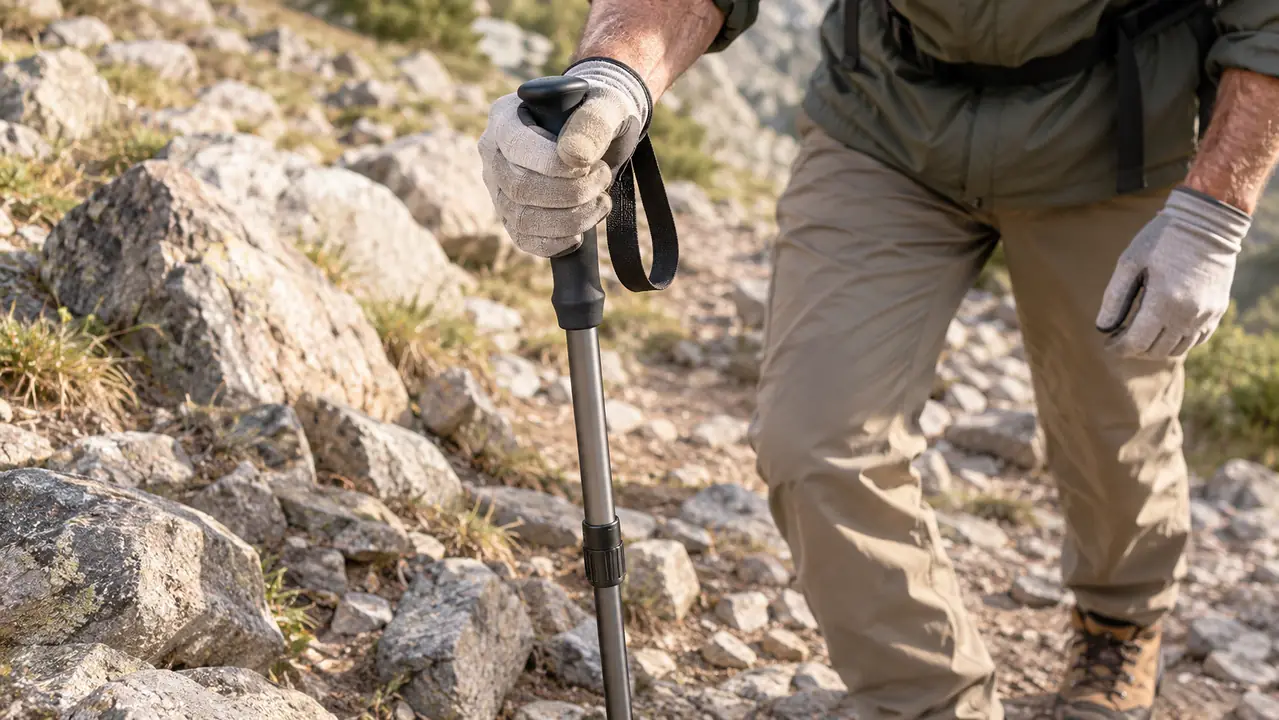
The lock is the whole ballgame on a trekking pole, and this is where the Black Diamond poles earn their keep. FlickLock is a flip lever, and the claim of fast one-handed length changes is accurate. I have changed length mid climb with gloves on, in cold rain, without stopping, which matters more than it sounds like it would. Several people I hike with use twist locks, and those require two hands and a certain amount of faith. Twisting something and hoping is not a good way to start a descent.
The honest caveat is that lever locks collect grit. Mine started feeling slightly stiff in August after a stretch of dusty trail, and a rinse and a wipe fixed it in about two minutes. That is not a defect, it is the deal with any mechanical lock. Twist locks will eventually fail you too, just more slowly and with less warning, which is worse in my opinion. The one thing I would tell a new owner is to check that both locks are snug before the season starts, and check again in the spring when you pull the poles out of the closet and cannot remember where you left them.
What I Liked
- FlickLock changes length one-handed, with gloves on, mid climb
- 486 grams listed for the pair, light enough to carry all day without resenting them
- Extended foam choke-up section gives you somewhere to put your hand on steep or uneven ground
- Aluminum shaft has survived rock, scree and one careless toss into the back of the Subaru
- Carbide Tech Tips bite on rock and hardpack
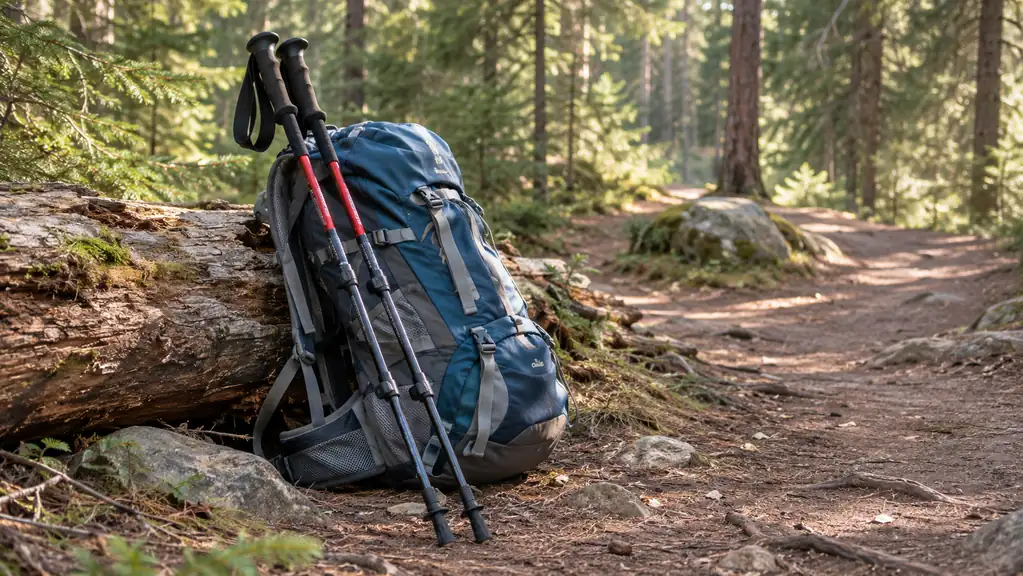
- Folds to 64 centimeters, short enough to strap on the outside of a daypack
Where It Falls Short
- Rubber tips for pavement and maintained paths are sold separately
- The one year manufacturer warranty is shorter than I would like for something I lean my weight on
- Foam grip gets slick when sunscreen and sweat mix on a hot afternoon
- Carbide tips scratch smooth rock and will mark a garage floor
- No spring or suspension anywhere in the spec sheet, which some hikers want on long descents
- Locks need an occasional cleaning in gritty conditions
They came out of the pack on every hike over five miles from April to October, and the only maintenance they needed all season was a rinse and a wipe.
The Weight and the Folded Size, Honestly
The listed weight is 486 grams. I did not weigh them myself, because I do not own a scale that precise and because the difference between 486 and 520 grams is not something I can feel in a pack anyway. What I can tell you is that they never bothered me. I have carried them strapped to a daypack on the way up a scramble where I wanted my hands free, and I forgot they were there. That is the only weight test that counts for a weekend hiker.
Aluminum is the reason I chose these over a carbon pair. Aluminum bends, and a bent pole can usually be straightened enough to get you home. Carbon, from what I have seen of it in other gear, tends to fail all at once and without warning, which on a descent is the worst possible time. That is a personal judgment, not a lab result, and I am not going to dress it up as one. If you are counting ounces for a long thru hike, carbon has a case. For a weekend backpacker in Montana who wedges poles between rocks to rest, aluminum is the sensible pick.
Folded, they come down to 64 centimeters. That is short enough to lash to the side of a daypack and short enough to fit in the back of the Outback without drama. It is not short enough to disappear inside a small pack. If you were hoping to stow them fully inside a twenty liter daypack, measure that pack first and do the arithmetic before you order.
The Grip and the Choke-Up Section
The grip is EVA foam, and the part that matters is that the foam runs well down the shaft, what the listing calls an extended foam choke-up section. On a steep sidehill, or when a rock step needs your hand closer to the ground, you slide your palm down onto the foam and keep moving without breaking stride. I used that constantly on the switchbacks and never thought about it once, which is the highest compliment I can pay a handle. A grip you notice is a grip that is doing something wrong.
Foam is not cork. A hiking friend of mine prefers cork handles and says they stay grippier when your hands are truly soaked, and she may well be right. Foam is lighter and it does fine in most conditions. My one complaint is real and small: on a hot August day, sunscreen plus sweat turns the foam a little slick under the palm. I wiped it with a bandana and got on with it. It was never slick enough that I worried about my hand sliding on a descent, and I was paying attention, because that is the sort of thing that gets a 59 year old woman carried off a hill.
The Tips and What They Do to Rock
The poles come with carbide Tech Tips, and carbide does what carbide does. It grips rock, dirt and ice, and it makes a small clicking sound that will either comfort you or drive you slowly around the bend. On wet slab, which is the surface that scares me most, the carbide bit and I stayed upright through a stretch I would have taken much more slowly without a pole in each hand. That is not a guarantee for your hike. It is a report from mine.
The rubber tips are sold separately, and that is the one thing I would change about the package. If you walk any pavement to reach a trailhead, or hike in a park that asks for rubber tips on maintained paths, you will want them on day one rather than after your first hike. Order them with the poles. The carbide also leaves marks. Mine have scratched the paint on a smooth slab, and I have learned not to lean on them in the garage, where the floor is finished and my husband is particular about it.
The Things I Do Not Like
One year of manufacturer warranty is thin for a piece of gear you plan to lean your weight on. I have not needed it, and both poles are still straight after a full season, but I noticed the number when I registered them and it stayed with me. There is also no spring or suspension listed anywhere in the specs, which some hikers want for long descents and joint comfort. I did not miss it. A spring adds weight and adds one more thing that can break in the cold at the wrong moment.
I also want to be clear about what a pair of poles does and does not do for a woman my age with a cranky knee. Poles help with balance. They help with rhythm. They take some load off on descents. They did not fix my knee, and on a long steep downhill in September I still felt it talking to me at the bottom. Anyone telling you poles substitute for strength work or for boots that actually fit is selling something. My Merrell Moab 3 Mid boots do more for that knee than the poles do. The poles are the second best thing in my pack, not the first, and I would rank them that way if you asked me at the trailhead tomorrow.
For what it is worth, a hiking friend uses Leki Makalu poles and let me handle them on a break in July. They felt like good poles and I understand the following. I have never hiked a mile on them, so I will not pretend I can compare the two from five minutes of standing around with a water bottle in my other hand. From handling both, the choice looks like it comes down to grip material and lock preference more than anything dramatic.
Who This Is For
This is a good pole for a hiker who wants one pair to do everything, who does not want to think about gear on the trail, and who would rather straighten a bent pole than nurse a cracked one. If you are a weekend backpacker, a day hiker past fifty, or someone whose knee has started making itself known on the way down, these will do the job and ask nothing of you. They are a sensible first pair too, because FlickLock lets you learn to adjust length on the move without a wrestling match while you are still figuring out your rhythm.
Who Should Skip It
Skip them if you want rubber tips in the box, because those are sold separately and you will be ordering them anyway. Skip them if you are counting ounces for a long thru hike and have decided carbon is worth the trade. Skip them if you want a suspension system, because there is not one here. And skip them if you are shopping for a cure for knee pain, because no pole on the market is that, and anyone who says otherwise has not walked a long descent in September with a knee that has opinions.
The Honest Bottom Line
I bought these with my own money in April and I will carry them again next season. That is the cleanest thing I can say about a piece of gear. They are light enough to forget, the locks work with gloves on, and the foam choke-up section earns its place every time the ground tilts sideways. My complaints are small and specific: separate rubber tips, a short warranty, foam that gets slick in August heat, carbide that marks up smooth rock. None of those have made me leave the poles at home, and at my age the things I leave at home are the things that do not earn their ounces.
If your knee has started talking on descents, start here
Aluminum shaft, 486 grams listed for the pair, FlickLock adjustment from 100 to 140 centimeters, folds to 64 centimeters, carbide Tech Tips. One full season on Montana trails and both locks still hold.
Amazon Check Today's Price on Amazon →