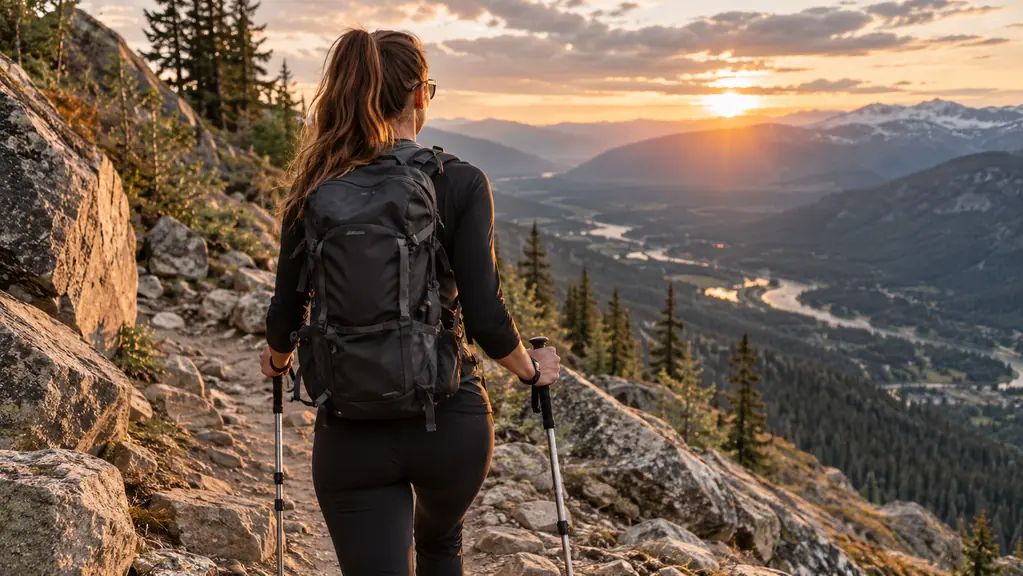
By the time I hit the switchbacks on the way down from St. Mary Peak, my left knee was talking to me. It had been a good hike up, the kind of morning that makes you remember why you live in Montana. But the descent was long, rocky, and steep, and I could feel every step in that joint. I am 59 years old, I have been hiking for about thirty years, and I know the difference between a bad day and a knee that needs help. That day was not bad. It was just a knee that needed poles.
I bought a pair of Black Diamond Trail Trekking Poles in the first week of April this year, after thirty years of hiking without poles. I used them on every hike over about five miles from April through October, and this review is about how they actually did over those miles. The short version: my left knee felt better on descents within the first three or four outings, and the poles are still going strong. The longer version is below.
The Quick Verdict
Reliable, comfortable trail poles that do the job without fuss. The FlickLock adjustment is easy to use on the trail, the foam grip is kind to my hands, and they have held up through a full season of rocky Montana hikes. Not the lightest pair I have handled, but a fair trade for the price.
Amazon Check Today's Price →The poles that carried me through a season of descents
If your knees are tired on the way down, these are worth a look. Black Diamond Trail Trekking Poles have a simple FlickLock system, a comfortable foam grip, and enough toughness for rocky trails. Check today's price on Amazon and see if they fit your hiking style.
Amazon Check Today's Price on Amazon →How I've Used It
I am not a gear tester who takes a product out twice and writes a review. I am a retired middle school science teacher who hikes most weeks from May to October, plus two or three backpacking trips each summer. My husband Tom hikes with me on most trips, and he has watched me fiddle with more than one piece of gear at the trailhead. These poles came on every hike over about five miles, including day hikes in the Bitterroot and two overnight trips with my Osprey pack. They also came on a few shorter walks when I knew the descent would be steep. That is roughly seven months of use, and I kept a mental note of what worked and what did not.
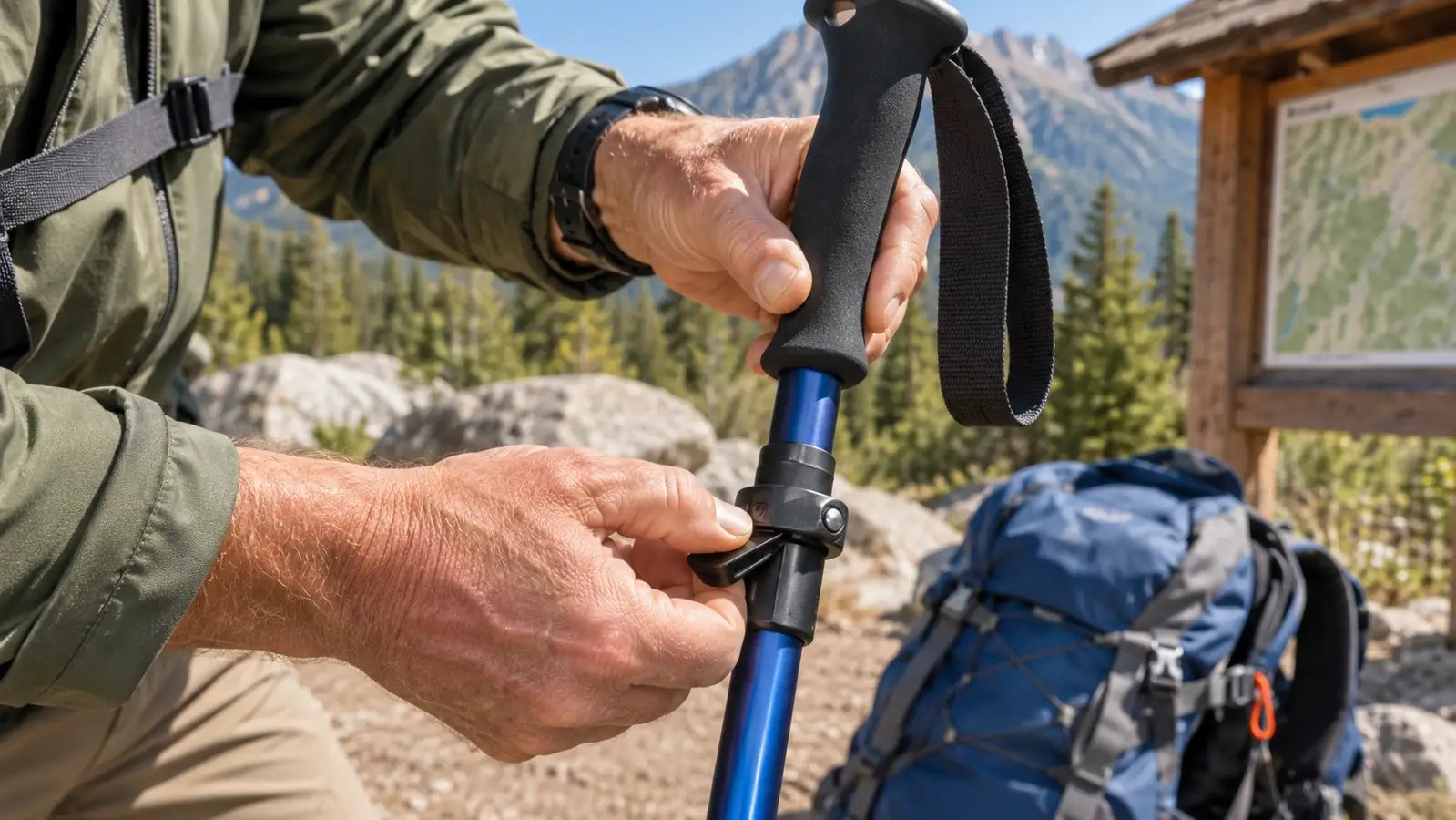
The first thing I noticed was the FlickLock adjustment. I set the length at the trailhead, and when I needed to shorten them for a climb or lengthen them for a descent, I could do it with one hand. The lock snaps shut cleanly and stays put. I have used twist locks before, and I have had them slip mid-hike. These did not slip once.
I also used the extended foam choke-up section more than I expected. On uneven terrain, I could slide my hand down and get a shorter grip without stopping. That sounds like a small thing, but it made a real difference on switchbacks and loose rock.
I want to be clear about what the poles did and did not do for me. They did not fix my knee, and I am not here to tell you they will fix yours. What I can tell you is that my left knee felt better on descents within the first three or four outings, and that I felt steadier on loose rock and uneven ground all season. That is a comfort and balance thing, not a medical claim. If you are dealing with a real injury, talk to your doctor before you blame any piece of gear.
Why I Started Using Poles at All
For years I was the hiker who thought poles were for other people, and I never owned a pair. Then I turned 59, my left knee started to get sore on long descents, and I realized I was spending the last mile of every good hike thinking about my knee instead of the view. That is a poor trade. I bought these poles in the first week of April, and I made a rule for myself: on any hike over about five miles, they come with me.
Tom was skeptical at first. He has strong legs and does not use poles, and he told me they would slow me down. After the first few outings, he stopped saying that. I was not faster, but I was steadier, and I did not have to stop as often to rest my knee on the way down. By midsummer, he was asking me to set the length on his pair when he borrowed them for a steep day. That says more than any spec sheet.
What the FlickLock System Does on the Trail
The FlickLock adjustment is the reason I chose these poles. Black Diamond makes a dependable system that lets you change the length quickly with one hand, and you do not have to take your gloves off to do it. On a long climb, I shortened the poles to keep my arms at a comfortable angle. On the way down, I lengthened them again so I could plant them farther ahead. The whole thing takes seconds.
I have used poles with twist locks, and I have had them work loose on a rocky descent. The FlickLock has a positive snap that I trust. There is no collar to overtighten and no guessing whether it is secure. When it clicks, it is locked. I checked them a few times over the season, and they never needed adjustment after I set them.
The Foam Grip and Choke-Up Section
The handle is made of ethylene vinyl acetate, which is a fancy way of saying it is a firm foam. I liked it more than I expected. It does not get sticky in the heat, and it gives enough cushion on a long day without feeling mushy. The extended foam choke-up section is the part I did not know I needed. When the trail got steep and uneven, I could choke up on the pole and shorten my grip without stopping to adjust anything.
I used the choke-up section most on switchbacks and loose rock, where a shorter grip gives you more control. It also helped on short, steep climbs where I wanted to plant the pole close to my body. The foam is smooth enough that my hand slides easily, but it is not slippery when I am sweating.
Weight, Packed Size, and What You Carry
These poles weigh 486 grams for the pair. That is not the lightest number on the market, and I will not pretend it is. But for the way I hike, the weight is a fair trade for the durability. I noticed them in my hand for the first mile, and then I stopped thinking about them. By the end of a ten-mile day, I was not wishing I had brought something lighter.
They fold down to 64 centimeters, which made them easy to strap to my Osprey pack on the two overnight trips I took this summer. The extended length is 140 centimeters, so I had plenty of room to set them where I needed. The folded size is not as compact as some three-section poles, but it was never a problem on the trail or in the car.

How They Held Up Over Seven Months
I bought these poles in the first week of April, and I used them through October. That is a full hiking season in Montana, with rocky trails, loose scree, a few stream crossings, and one afternoon of hail that sent us off the ridge early. The aluminum shafts have a few scuffs now, but no bends, no cracks, and no loose sections. The FlickLock still snaps shut the same way it did in April.
The interchangeable carbide Tech Tips have held up well on rock and dirt. They are the kind of tip that bites into the trail instead of skittering across it, and I never felt like I was going to lose my footing on a descent. The rubber tips are sold separately, which is worth knowing before you buy. I mostly used the carbide tips, but I would have liked the rubber ones in the box for the few times I walked on pavement.
The one-year manufacturer warranty is shorter than some hikers would like, and I will be honest about that. I have not needed it, and I do not expect to need it soon, but it is worth knowing. The base material is rubber, which gives a solid grip on rock, and the included components are just the two poles. There is no carrying case in the box, which surprised me a little. I bought a simple velcro strap for the car, and that solved the problem. These poles are simple to care for. I wiped the shafts down with a damp cloth after muddy hikes, and I rinsed the carbide tips when they picked up too much grit. The FlickLock does not need any special maintenance, but I did check the locks once toward the end of the season. Everything was tight. I will store them folded in the garage over the winter, and I expect they will be ready to go in the spring.
If I could change one thing, it would be the rubber tips. I understand why they are sold separately, because most people will use the carbide tips most of the time. But I walk on pavement to reach some of my favorite trailheads, and carbide tips on pavement make a lot of noise and wear down faster. I bought a pair of rubber tips separately and kept them in my daypack. It would be easier if they came in the box, but it is not a reason to skip these poles. The other thing I would change is the storage situation. The poles do not come with a carrying case, and they are 64 centimeters folded, which is a little long for a daypack. I solved that with a simple velcro strap, and I keep them on the outside of my pack when I am moving between trailheads. It is a small thing, but it is worth knowing before you buy.
What I Liked
- FlickLock adjustment is fast and reliable, no slipping after a full season
- Foam choke-up section gives a secure lower grip on uneven ground
- Aluminum build feels solid on rocky trails
- Folds to 64 cm, easy to strap to a pack
- Carbide tips bite into rock, dirt, and ice
Where It Falls Short
- Not the lightest pair at 486 grams
- Rubber tips are sold separately, not included
- Foam grip can get grubby after a season of use
- One-year warranty is shorter than some competitors offer
The moment I knew the poles were doing their job was the first steep descent where my left knee did not announce every step. That happened within the first three or four outings, and it has stayed true all season.
Who This Is For
Black Diamond Trail Poles are for hikers who go out regularly and want something dependable that does not require a lot of fiddling. If you are 40 to 70, your knees are a little tired on descents, and you want a pair of poles that will handle rocky mountain trails without feeling like a science project, these are a strong fit. They are also a good fit for backpackers who want a pole that folds down to 64 cm and straps easily to a pack. I used them on two overnight trips this summer and never once wished I had brought something else.
Who Should Skip It
Skip these if you are a gram-counter who wants the lightest possible pole for long-distance racing. At 486 grams, they are not the lightest pair on the shelf. Skip them if you need rubber tips included in the box, because those are sold separately. And if you prefer a cork grip or a twist-lock system, you may want to look at other options. These are honest, comfortable, dependable poles, but they are not the answer for every hiker.
Final Thoughts
I have been hiking for about thirty years, and I have learned to be suspicious of gear that promises to change your life. These poles do not promise that. They are a simple, well-made tool that does one job well: they make long descents easier and keep me steadier on uneven ground. After seven months of use, I trust them. That is the highest compliment I can give any piece of hiking gear.
Ready to give your knees a break on the way down?
After a full season of use, I can tell you these poles do what they are supposed to do. The FlickLock adjustment is easy, the foam grip is comfortable, and the aluminum build has taken everything the Bitterroot threw at it. Check today's price on Amazon and see if they are the right fit for your next hike.
Amazon Check Today's Price on Amazon →