Ask me which trekking pole I carried on every hike over about five miles this season and the answer is simple: the Black Diamond Trail poles. Ask me which pole you should buy and the answer takes a little longer, because the Leki Makalu is a genuinely good pole that some hikers will prefer. I have used the Black Diamond Trail poles from the first week of April through the end of October, roughly seven months of day hikes in the mountains around Missoula plus a couple of overnight trips, and I have handled the Leki Makalu in a store and tried a friend's pair for about twenty minutes at a trailhead in the Rattlesnake. Here is the honest comparison, the kind I would give you at the trailhead.
The short answer: the Black Diamond Trail poles win on weight and on how fast you can adjust them, and they did exactly what I needed them to do for my left knee on descents. The Leki Makalu wins on grip comfort for some hands and on a locking system that many hikers trust without thinking about it. For me, the Black Diamond Trail poles were the right choice, and my knee felt better within the first three or four outings, which is all I really asked of them. But the Makalu is not a mistake, and for a specific kind of hiker it may be the better pole.
| Black Diamond Trail Poles | Leki Makalu | |
|---|---|---|
| Weight | 486 g per pair, light enough for long day hikes | Heavier, built for rough use |
| Locking system | FlickLock, one-handed length changes on the go | Twist locks, reliable but slower to adjust |
| Grip | EVA foam grip with extended choke-up section | Aergon grip, wider and more contoured for small hands |
| Tips | Interchangeable carbide Tech Tips for rock, dirt, and ice | Interchangeable carbide tips, standard for the category |
| Best for | Everyday hikers who want light, easy-to-adjust poles | Hikers who prioritize grip comfort above all else |
Where Black Diamond Wins
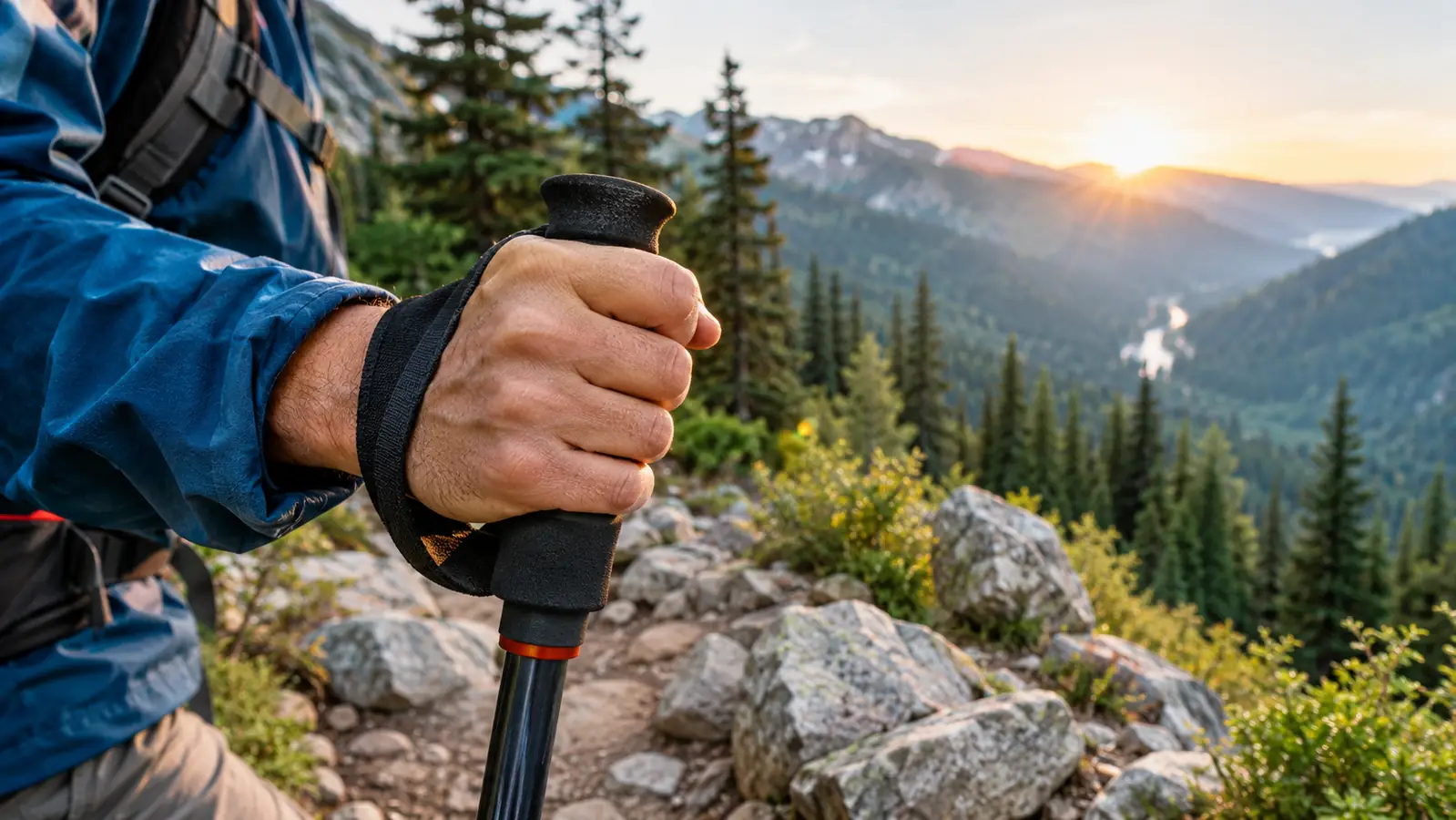
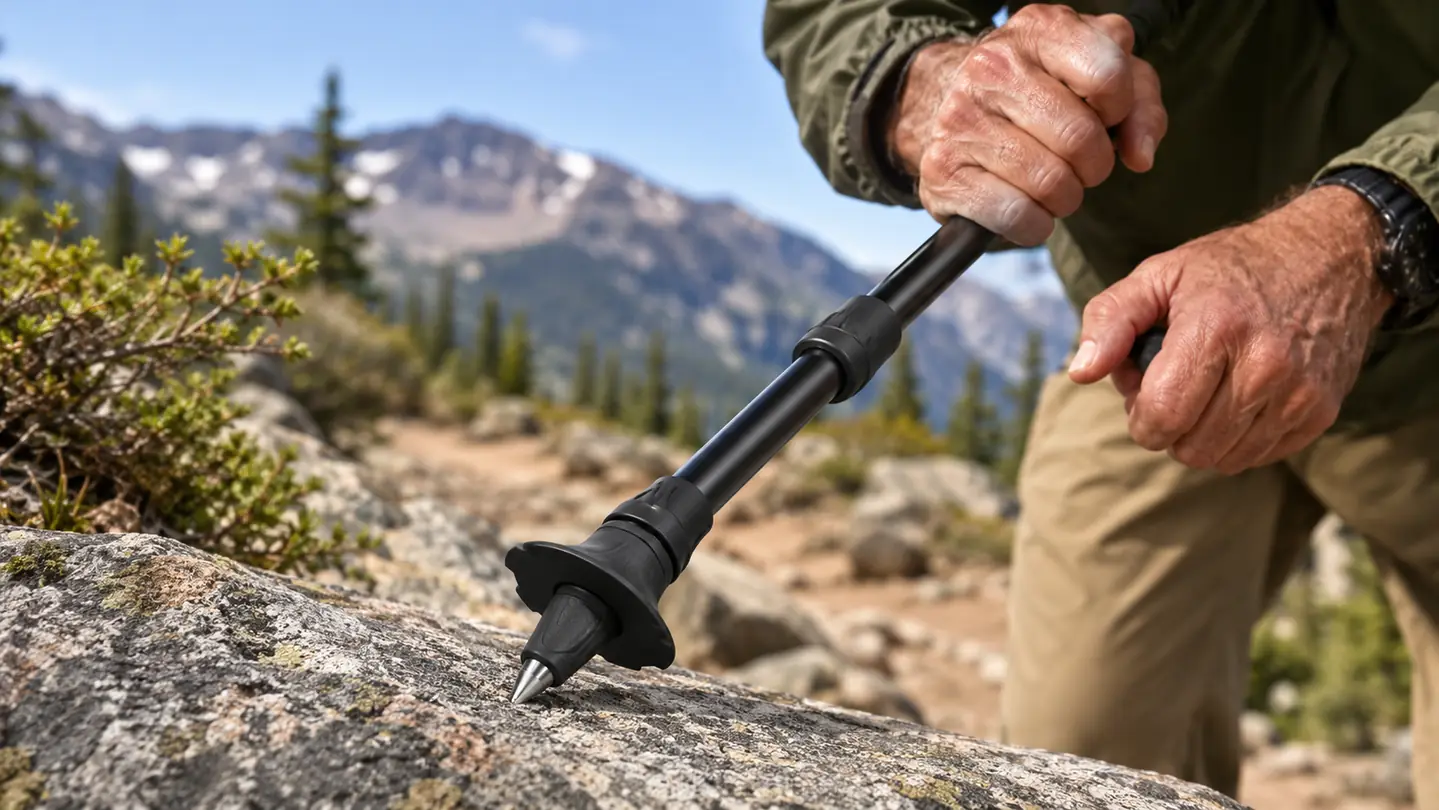
The first thing I noticed was the weight. At 486 grams for the pair, the Black Diamond Trail poles are just over a pound, and they are noticeably lighter than the Leki Makalu. I felt the difference the first time I picked them up in the store, and I feel it every time I carry them on a long day. On a 10-mile loop in Blodgett Canyon in August, I stopped noticing the poles in my hands somewhere around mile six, which is exactly what I want. I expected tired arms by the last mile of every descent, and with a pair this light I did not get them. Lighter poles are easier to keep planting, and keeping a rhythm matters more than people think. When you are stepping down a rocky section and your left knee is already complaining, the last thing you want is a pole that feels heavy to lift and set down. The Black Diamond Trail poles never felt that way, even at the end of a long day. I weighed them once on my kitchen scale just to confirm the listing, and 486 grams for the pair was right. That is not the lightest pole on the market, but it is light enough that I do not think about it, and for an everyday hiker that is the whole point. I also like that they fold down to 64 centimeters, which means they fit in the back of my Subaru Outback without me having to angle them across the seats. The aluminum shafts have taken some real hits on rocky trails this season, and after seven months they still look the way they did in April. That combination of light weight and durability is why they have stayed in my car all season instead of being relegated to the gear closet.
The FlickLock adjustment is the other clear win, and it is the reason I reach for these poles over any twist-lock pair. The Black Diamond Trail poles adjust from 100 to 140 centimeters, and I change that length a lot. On a typical day I start with the poles a little short for the flat approach, lengthen them for the climb, shorten them again for the descent, and that is before I hit any steep switchbacks where I want them shorter still. With the FlickLock, every one of those changes is a one-handed motion. I flip the lever, slide the section, and close it, all while my other hand is holding a rock or a branch. The first time I tried it on a slope, I remember thinking that this alone was worth choosing them. From the store demo and the published specs, the Leki Makalu's twist locks take both hands, and on uneven ground that is awkward. You have to hold the pole steady, loosen the collar, slide the section, and tighten it again, and if you are standing on a 15-degree slope with a pack on, that is a lot of fiddling. The extended foam choke-up section on the Black Diamond Trail poles is the other detail I did not expect to use as much as I do. When a trail gets steep, I slide my hand down onto that section and shorten my grip without changing the pole length at all. It is a small thing, but on a long descent it means I am not constantly stopping to adjust. The grip itself is EVA foam, which does not get slippery when my hands sweat, and the rubber tips at the base are replaceable, which matters because rocky trails wear through tips. Those details, plus the lighter weight, are why the Trail poles are the ones in my car.
Where Leki Wins
I have to be honest about the grip, because this is where the Leki Makalu genuinely beats the Black Diamond Trail poles for some people. The Makalu's Aergon grip has a wider, more contoured shape that fills the palm differently than the Black Diamond Trail poles' EVA foam grip. My friend Diane, who owns the Makalu and hikes with me a few times a year, has smaller hands than I do, and she loves it. She says the shape of the grip keeps her hand from sliding down the shaft on steep climbs, and I can see why when I tried her pair. The contour sits in the palm in a way that feels more locked in. I found the Black Diamond Trail poles' foam grip perfectly comfortable, and I have never had a problem with it on a 10-mile day, but I have to admit the Makalu grip is more plush. If you have ever had your hand go numb on a long descent, or if you are someone who grips a pole hard when the trail gets rough, the Makalu is worth a close look. Grip comfort is one of those things you cannot judge from a spec sheet. You have to hold the pole for a while, ideally on a real trail. I spent twenty minutes with Diane's pair at the trailhead one morning in September, walking a flat stretch and then a short steep pitch, and I could feel the difference. It was not enough to make me switch, because I had already put a full season of miles on the Black Diamond Trail poles and my knee was happy, but if I were buying today and I had smaller hands, I would probably buy the Makalu.
The Makalu also wins on the locking system for a certain kind of hiker, and I want to be fair about this because it is a real argument. Twist locks, like the CLK system on the Makalu, are a simpler mechanism than a flick lock. There are fewer moving parts, and there are plenty of hikers who have used twist locks for twenty years and trust them completely. They have a point. A flick lock has a lever and a cam, and while the FlickLock on my Black Diamond Trail poles has never given me a moment of trouble in seven months, I understand why someone would prefer a mechanism with less to go wrong. My husband Tom is one of those people. He has hiked with twist-lock poles for years and he will not switch, even though he admits mine are lighter and faster to adjust. He says he likes being able to feel the lock tighten, and he does not mind the extra few seconds it takes. The Makalu's locks seemed fine in the twenty minutes I tried Diane's pair, though that is too short to judge them over real miles. On a pole that will take a beating over many seasons, that simplicity has a real appeal, and the Makalu is built for rough use. If grip comfort and a proven, simple lock matter more to you than weight and one-handed adjustment, the Makalu is the better choice, and I would not argue with you for a minute.
The pole that earned a permanent spot in my Subaru
After a full season of trail miles, the Black Diamond Trail poles are the ones I reach for every time. Check today's price on Amazon and see if they fit your hiking style.
Amazon Check Today's Price on Amazon →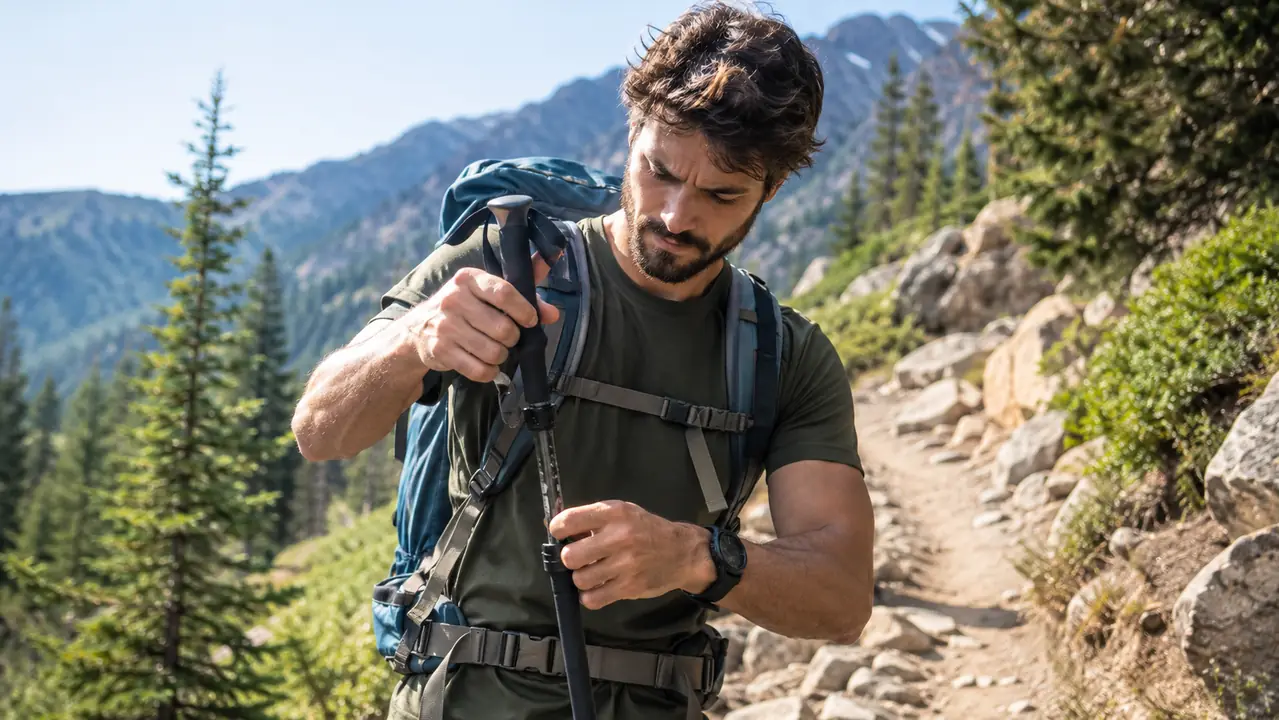
Who Should Buy Which
Buy the Black Diamond Trail poles if you are an everyday hiker who wants a light pole with a fast, one-handed adjustment, and especially if your knees complain on long descents. They worked for my left knee within the first three or four outings, and they have been on every hike over five miles since. I cannot promise they will do the same for you, because knees are personal, but I can tell you that I noticed a real difference on the downhills within the first month. Buy the Leki Makalu if grip comfort is your top priority, if you have smaller hands, or if you simply trust a twist lock more than a flick lock. There is no wrong answer here, and I mean that. Both poles are well made, both have carbide tips that grip rock and dirt, and both will last for years if you take care of them. The difference is in the details: how much the weight matters to you at the end of a long day, how often you adjust your length, and how the grip feels in your own hand. Those are things only you can decide, and the best way to decide is to handle both pairs in a store.
For me, the decision came down to how often I adjust my poles. I am always changing length, going from a flat approach to a steep climb to a rocky descent, and the FlickLock on the Black Diamond Trail poles makes that a one-handed motion I can do without stopping. On a typical day hike in the mountains outside Missoula, I probably adjust the length four or five times, and I would rather spend that time looking at the trail than fiddling with a lock. The lighter weight is a bonus I feel on every hike, especially the long ones in late summer when I am already carrying extra water. By the end of October, after seven months of use, the Black Diamond Trail poles were still the first thing I grabbed out of the back of my Subaru, and they will be the first thing I grab next spring. I have recommended them to more than a few hikers at the trailhead, and I have not had anyone come back to tell me they wished they had bought something else. That is about the best endorsement I can give a piece of gear.
Still deciding? Start with the pole that made my knee feel better
The Black Diamond Trail poles are the ones I used all season, and the ones I would buy again. Check today's price on Amazon and see if they are right for your trails.
Amazon Check Today's Price on Amazon →