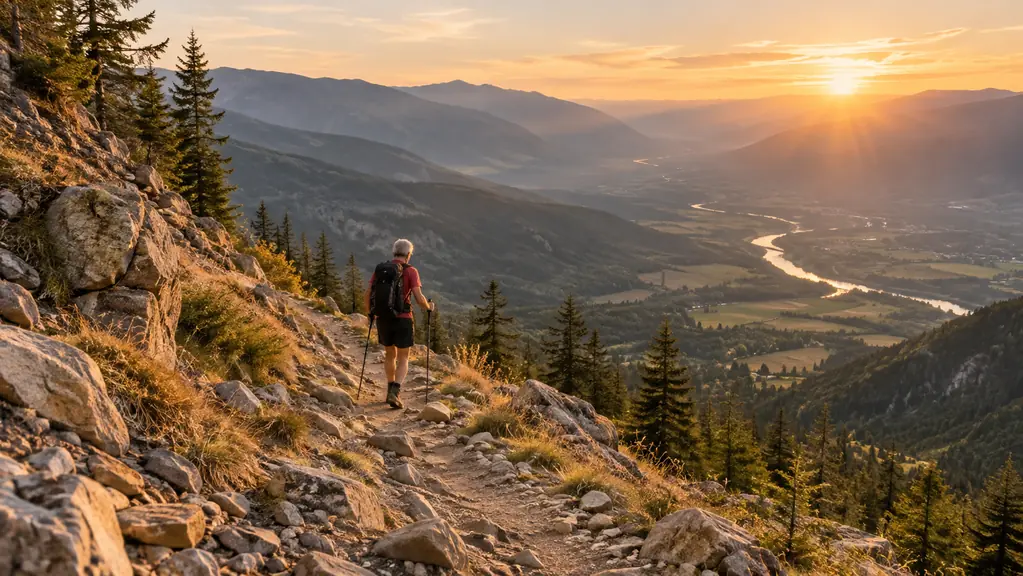
I did not buy my Black Diamond Trail poles because I wanted to look like a serious hiker. I bought them because my left knee was done being polite about descents. I am Nell Brandvold, I have hiked around Missoula for about thirty years, and by this spring I had reached the point where the first steep downhill mile felt fine and the third one felt like a negotiation. My husband Tom will tell you I got quieter on the way down. So in the first week of April, after retiring my old gear, I bought a pair of Black Diamond Trail poles and told myself I would give them a fair season. Seven months and every hike over five miles later, here are the ten reasons they took the edge off long descents.
Tired knees deserve a fair season with these poles
I put a full season of Montana miles on my Black Diamond Trail poles before I trusted them. If your knees complain on the way down, this is the pair I would start with.
Amazon Check Today's Price on Amazon →A third point of contact on every step down
The simplest reason is the one I felt first. On a steep descent, two legs and two boots have to catch all of me. Add a pair of Black Diamond Trail poles and every step down has two extra points of contact. My left knee stopped taking the full shock of each drop because my arms were sharing the load. On a late September descent off the Stuart Peak trail, I counted my steps for a stretch and realized I was planting a pole with nearly every one. My knees were doing less work because my arms were doing more. That is the whole trade, and it is a good one, especially on the loose gravel sections where a boot can slide. It is not a medical fix, it is just physics, and physics does not get tired.
The FlickLock lets me change length in seconds
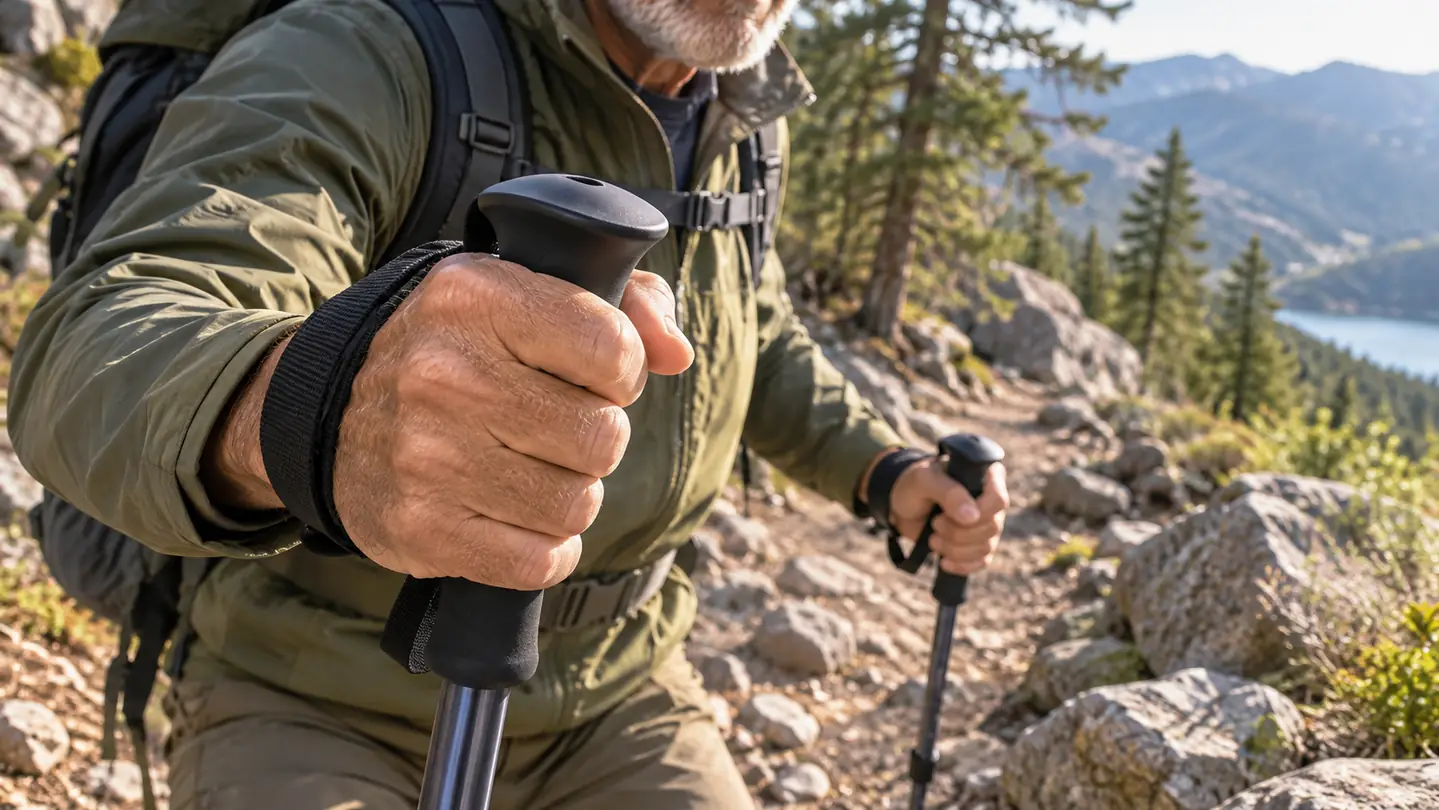
The FlickLock adjustment system is the detail I appreciate most. I flip the lever, slide the section, and flip it closed, all with one hand, without taking my other hand off the pole. I lengthen the poles a bit for descents and shorten them for the flats, and I can do it without stopping the person behind me. On the way up to the Blodgett Canyon overlook I kept them shortened for the climb, then flipped both locks and lengthened them for the drop back down, all without setting my pack down. The whole change took maybe ten seconds, and I did not have to stop or take a glove off. Tom was still fiddling with his water bottle when I was ready to move. After a full season the locks still hold exactly where I set them.
The foam choke-up section saves my wrists on uneven trail
The extended foam choke-up section is more useful than I expected. On uneven terrain I slide my hands down to the foam and get a different grip angle without changing my pole length. It keeps my wrists comfortable when the trail tilts sideways, and it means I am not constantly fiddling with the locks on every grade change.
The carbide Tech Tips hold on rock, dirt, and ice
The interchangeable carbide Tech Tips are the reason I trust these poles on the steep stuff. They grip on rock, dirt, and ice, which covers just about every surface a Montana trail throws at me between May and October. One afternoon on the rocky switchbacks above the Blackfoot River, I planted hard on a slab of granite still wet from the night before, and the tip held long enough for me to step down clean. I have planted them on loose gravel and slick slabs all season, and they have held every time. That confidence is the whole reason I can commit to a step instead of hesitating. That grip is what lets me put real weight on the poles instead of just carrying them.
The aluminum build takes the rocky miles without complaining
The material type is aluminum, and after seven months of rocky miles I understand why that matters. The poles are tough enough for the rough trail sections around here, and they have taken plenty of hard plants without bending or rattling loose. I am not gentle with gear, and the Black Diamond Trail poles have not asked me to be.
They are light enough to forget they are in my hands
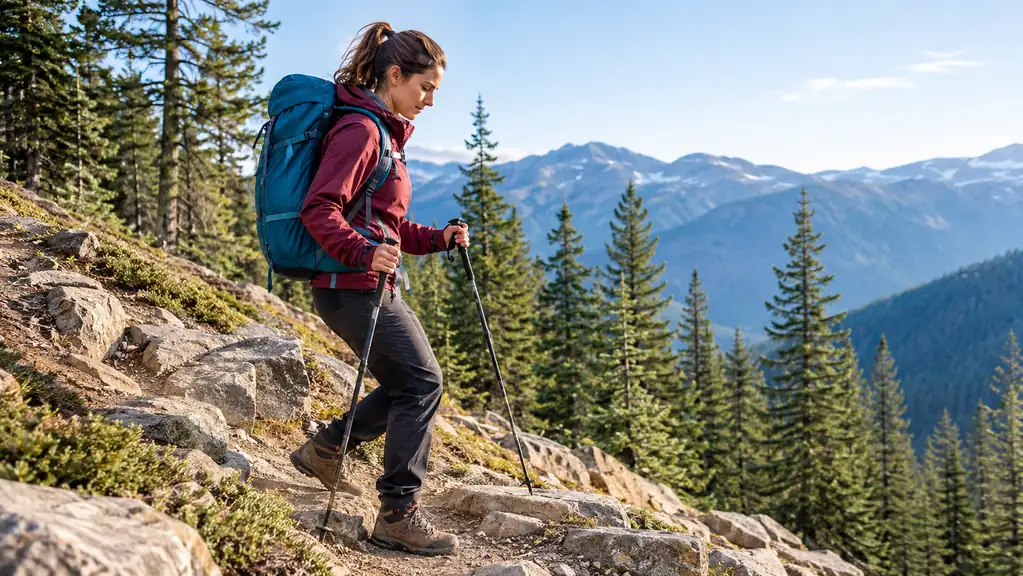
The whole pair weighs 486 grams, which I did not fully appreciate until mile eight of a long day. I expected poles to make my arms feel the miles. These do not. On a nine-mile loop in the Bitterroot in late July, I stopped noticing the poles around mile six, which is exactly when I had expected them to start feeling heavy. By the time we got back to the car at the end of the afternoon, my arms were not the thing I was thinking about. I notice these when I need them and forget them the rest of the time, and that is exactly what I want from gear I carry all day.
The EVA foam handles stay comfortable on long days
The handle material is ethylene vinyl acetate foam, which sounds technical and feels simple. It is comfortable in my hand on a six-hour day, wet or dry, and it does not get slippery when I am gripping hard on a descent. I have caught myself white-knuckling the handles on steep sections, and the foam has never given me a hot spot.
The rubber base plants quietly on rock
The base material is rubber, and it does a quieter job than people give it credit for. On dry rock and hard trail, the rubber base plants without sliding and without the clatter of metal on stone. It lets me move downhill without announcing every step, and on a quiet morning trail that matters more than I expected.
They fold to 64 centimeters and ride in my daypack
The folded size is 64 centimeters, which means the poles ride inside my daypack on the drive to the trailhead instead of rattling around the back of the Subaru Outback. They extend out to 140 centimeters for my height, and the range has covered every hiking day I have thrown at them. When I am not using them, they are out of the way.
My left knee felt better within the first few outings
This is the reason that matters most. Within the first three or four outings, my left knee felt better on descents. Not cured, not fixed, just noticeably better, and that improvement held for the whole season. I still take descents at my own pace, and I still feel the miles at the end of a long day. But I no longer dread the way down, and that is the whole point.
What I'd Skip
I would skip these poles if you only hike flat, well-groomed trails under two miles. On short, easy walks the poles are extra weight in your hands and they do not earn their place. I would also skip them if you refuse to adjust length on the go, because the FlickLock system only helps if you actually use it. And I would skip them if you expect poles to fix a knee that needs a doctor. Mine help with comfort and balance, and that is all I claim for them.
Within the first three or four outings, my left knee felt better on descents. Not cured, just noticeably better, and that improvement held for the whole season.
Give your knees the same fair season I did
I tested my Black Diamond Trail poles on every hike over five miles from April to October before I trusted them. If long descents are wearing you down, this is the pair I would start with.
Amazon Check Today's Price on Amazon →