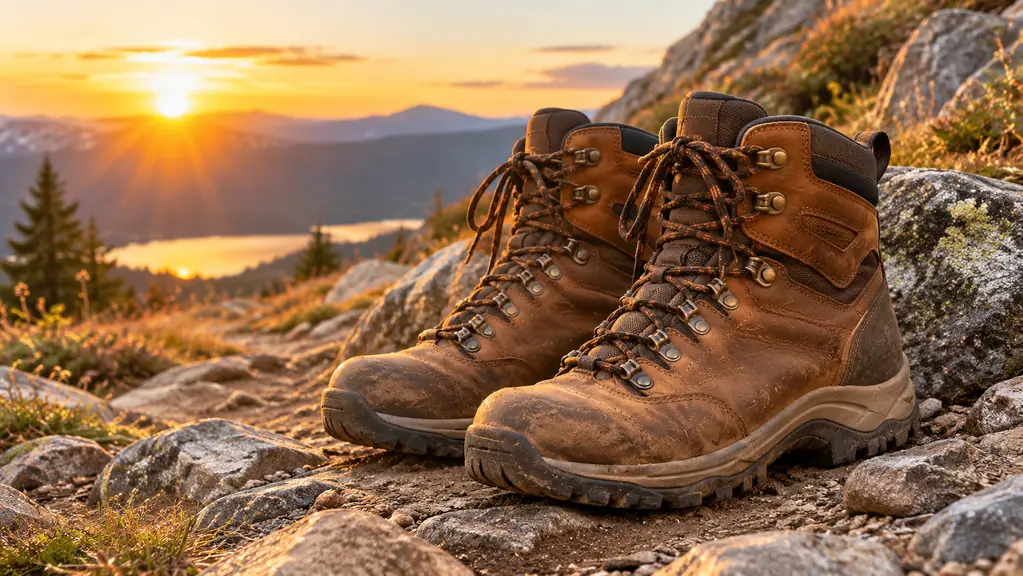
You have probably read that the Merrell Moab 3 Mid Waterproof is the boot everyone recommends to beginners, the one that sells by the millions, the safe answer. I bought my pair in the first week of April, retired the generic boots I had worn out, and then spent about seven months and roughly 300 trail miles finding out whether the safe answer is actually the right answer. I am Nell Brandvold, I am 59, I have hiked for about thirty years, and I live outside Missoula, Montana. I do not test gear in a lab. I test it on the trails I would be using it on anyway, which means I can tell you what the Merrell Moab 3 Mid does well and what it does not, without the marketing copy.
This review is the honest version. The short version is that the Moab 3 Mid is a comfortable, dependable hiking boot that does almost everything well and nothing spectacularly. The longer version is that it has real limits, and those limits matter if you carry a heavy pack, hike rocky descents every weekend, or expect one boot to last five years. I want to tell you what nobody tells you before you click buy, because I think you deserve to know before you spend your money.
The Quick Verdict
A comfortable, capable all-rounder that suits most day hikers, but the cushioning breaks down faster than I hoped and the tread is better on dirt than on wet rock.
Amazon Check Today's Price →The boot that carried me through 300 trail miles
If you want a mid-height, waterproof boot that fits most feet right out of the box, the Merrell Moab 3 Mid is the one I keep reaching for. Check today's price on Amazon and see if it fits your foot.
Amazon Check Today's Price on Amazon →How I Have Used It
I wore the Merrell Moab 3 Mid Waterproof for every trail day from April through October. That means day hikes most weeks, a couple of longer weekend trips, and three backpacking trips of two to three nights each. The boots carried a loaded pack on the overnight trips, which is where a boot earns its keep or does not. On the first backpacking trip in June, up the West Fork trail in the Bitterroot, my pack weighed somewhere north of thirty pounds with three days of food and water, and the boots handled the load without complaint. That is not nothing. A boot that feels fine on a two-hour day hike can feel very different at mile nine with a pack on. My left knee gets sore on long descents, so I paid attention to how much shock the cushioning soaked up and how much my knee felt.
The first two weeks were a break-in period, and I want to be honest about that because a lot of reviews skip it. The boots felt stiff around the ankle for the first several short walks near home. Not painful, just present. I took them on three short walks around the neighborhood, maybe two miles each, before I trusted them on dirt. The ankle collar pressed against my ankle bone for the first week, and I wondered whether I had bought a size too small. I did not. By the end of two weeks, after about twenty miles of easy walking, the leather relaxed and the collar stopped announcing itself. I wear a women's size 9 and I have a slightly wide forefoot. The Moab 3 Mid gave my forefoot enough room without slopping around at the heel, which is the fit problem I have with a lot of boots.
I did not do anything special to them. No waterproofing spray, no special laces, no break-in hikes. I just wore them on short walks, then longer ones, then trails. The first real test was a six-mile loop on the Pattee Canyon trails in late April, and the boots felt like old friends by the time I got back to the car. I remember thinking that if the break-in had gone on much longer I would have been annoyed, because nobody wants to spend a month coaxing a new boot to fit. Two weeks felt reasonable. That is the experience most buyers will have, and it is worth knowing that the famous Merrell comfort is real, but it is not instant.

What Nobody Tells You About the Comfort
The first thing nobody tells you is that the foam cushioning is the best part of the boot and also the part that ages fastest. The Merrell Moab 3 Mid has a foam insole and maximum cushioning, and for the first two or three months those boots felt great on dirt trails. By late summer, around the 200-mile mark, the cushioning felt firmer. Not worn out, but not as plush as it was in May. The day I noticed was a Tuesday in mid-September, a nine-mile out-and-back on a rocky trail above the Clark Fork. Coming down the last two miles, my left knee had that familiar ache, the one I usually manage with my trail poles. I had left the poles in the car that day, and I could feel every rock through the cushioning. The boot was not hurting my foot. It just was not cushioning the way it had in May. That is the honest difference between a new boot's cushioning and one with 200 miles on it.
The second thing nobody tells you is that the flat heel and plain toe are not a mistake, they are a design choice. The Moab 3 Mid is not a technical boot. It does not have an aggressive rocker, a stiff shank, or a heel that locks you into steep terrain. It is a neutral, flat, comfortable boot for walking on dirt. I tried on a friend's boot with a stiffer shank and a more sculpted heel, and I understood right away why people who scramble over talus love that style. But I do not scramble over talus. I walk on dirt trails, and the flat heel suits the way I actually hike. The plain toe has not stubbed a root in seven months, which is more than I can say for some narrower boots I have owned. That is the honest tradeoff: you give up technical climbing ability, and you gain a boot that does not fight you on the trail.
The third thing is the one that surprised me most. The leather and mesh upper breathes well in the fall, which is the season Merrell lists for these boots, but on a hot July day my feet got warm. Not soaked, not blistered, just warm. On a July trip in the Rattlesnake Recreation Area, the temperature was in the mid-eighties by noon, and my feet were uncomfortably warm by the time we stopped for lunch. I took the boots off at a creek crossing and soaked my socks in the water, which helped for about an hour. My husband Tom, who wears a lighter non-waterproof boot in summer, did not have that problem. He also had wet feet after the first creek crossing, so I will take warm and dry over cool and wet, but I want you to know the tradeoff exists before you buy a waterproof boot for summer hiking.
The Merrell Moab 3 Mid is not the boot that will transform your hiking. It is the boot that will show up, do the job, and not complain about it, which after 300 miles is a higher compliment than it sounds.
Waterproofing and Traction: The Honest Test
The boot is called Waterproof, and the water resistance level on the listing is, in fact, waterproof. I tested it the way I test everything, by walking through wet grass, puddles, creek crossings, and one genuinely rainy day in September. The rainy day was late September, a steady drizzle that started at the trailhead and never let up for four hours. I was on the North Fork of the Blackfoot, a trail that crosses a dozen small streams, and I stopped checking for dry ground after the first mile. My socks stayed dry. That is the part the waterproof rating gets right. On the June backpacking trip I crossed the same creek four times in one afternoon, and my socks were dry at camp that night. The limit showed up on the way back from the rainy day hike, when I stepped off a rock into a pool that came up past the top of the boot. Water poured in over the collar, and I spent the last mile squelching. That is not a Merrell failure. Every mid-height boot has a collar, and every collar has a height. But it is the difference between a waterproof boot and a dry day.
Traction is where I have the most honest criticism. The Moab 3 Mid is recommended for dirt, and on dirt it is excellent. Dry dirt, loose gravel, packed trail, all fine. The tread pattern is shallow, and that is the tradeoff. On wet rock, on slick roots, and on steep, muddy descents, the grip is merely okay. The slide happened on a granite slab in the Bitterroot in August, a section of trail where the route crosses bare rock for maybe fifty yards. The rock was wet from an overnight storm, and my left foot slipped sideways about six inches before I caught myself on my poles. I did not fall, and the boot did not fail. But I remember thinking that a deeper lug would have bitten into that rock instead of skating across it. On packed dirt and loose gravel, the shallow tread is plenty. On wet rock, I slowed down and picked my line more carefully, and that is not what you want to be doing at the end of a long day.
How It Held Up Over 300 Miles
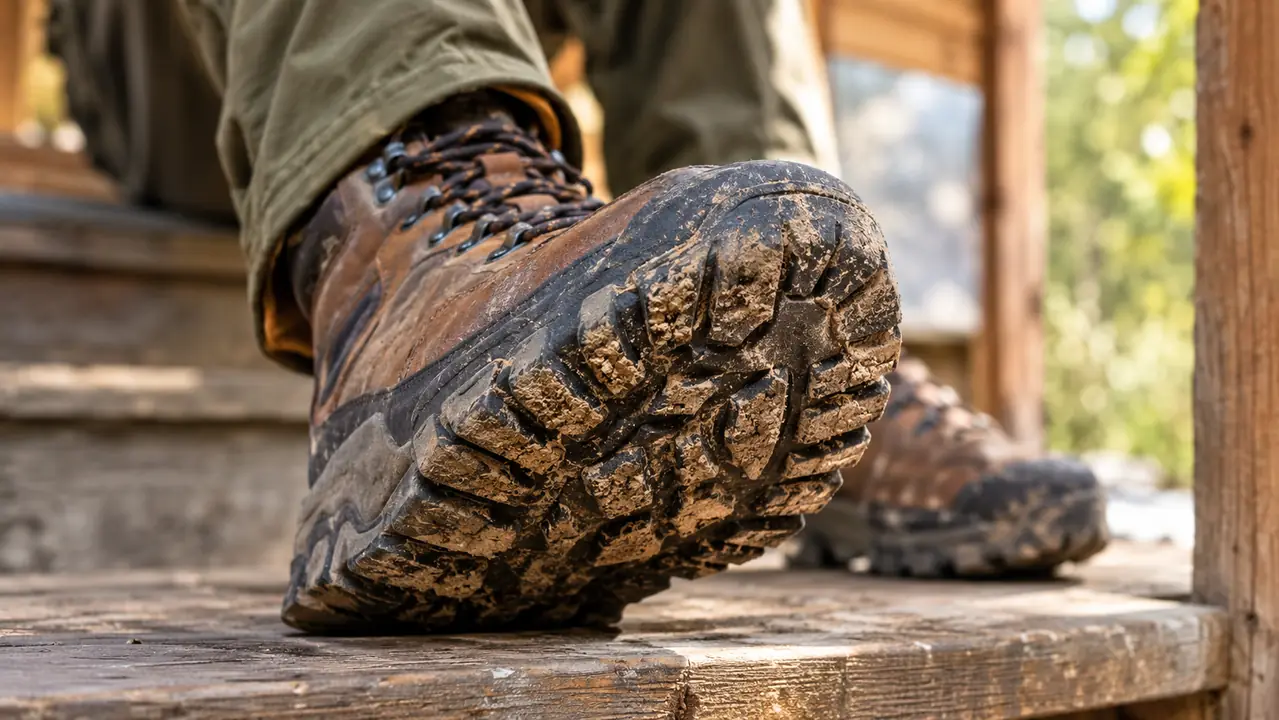
After about 300 trail miles, the uppers look good. The leather around the toe has scuffs from rocky trail, but no cuts and no peeling at the seam where it meets the mesh. The mesh itself is intact, which surprised me, because mesh is usually the first thing to go on a hiking boot. The laces are the original pair, and the eyelets show no sign of pulling. I compared the tread with a new pair on a store shelf in October, and I would guess mine has about half the original depth left. That is normal for 300 miles of dirt trail, and it means I will need new boots before the leather gives out. The foam cushioning is the first thing to go soft, and that is the honest answer to the question everyone asks about durability. You will not wear out the leather before the cushioning flattens.
I also want to tell you what did not happen. No blisters. Not one. That result is worth unpacking, because it is not just luck. I wore the boots with Darn Tough Hiker Micro Crew socks, three pairs that I rotate, and the combination of a sock that does not wrinkle and a boot that does not pinch is what kept my feet whole. I also stopped to retie my boots on every long climb, because a boot that is loose on the descent lets your foot slide forward and rub your toes. I did that with my old boots too, and I still got blisters. The Moab 3 Mid simply fits my foot better. The boots also did not fall apart, did not delaminate, and did not lose a single eyelet. That is a boring sentence, but in the hiking boot world, boring is a compliment.
The honest durability caveat is that I cannot tell you how these boots will look at 600 miles, because I am not there yet. What I can tell you is that at 300 miles they feel like a boot that has another season in them, maybe two, but not the five years some buyers hope for. The foam will flatten before the leather wears out, and when it does, you will feel it in your knees before you see it in the mirror. I have watched that happen on other boots over the years, and I expect it here because the foam cushioning is doing the work the leather never has to. If you hike twenty weekends a year like I do, plan on replacing the Moab 3 Mid every couple of seasons, not every decade.
What I Liked
- Genuinely comfortable out of the box after a two-week break-in, with real room for a slightly wide forefoot
- Kept my feet dry through wet grass, puddles, creek crossings, and a full day of steady rain
- Dependable on dirt trails, which is exactly what the listing recommends them for
- Uppers show almost no wear after about 300 miles: no tears, no pulled eyelets, no delamination
- No blisters in seven months, which is the highest compliment I can give a boot
Where It Falls Short
- The cushioning flattens noticeably around the 200-mile mark, and my knee felt it on descents
- Shallow tread slides on wet rock and slick roots, so it is not a boot for technical terrain
- The waterproofing runs warm on hot summer days
- Not built for heavy packs or week-long trips; the foam does the work and it tires first
- Water that comes over the collar gets in, same as any mid-height boot
Who This Is For
Buy the Merrell Moab 3 Mid if you are an everyday hiker who walks on dirt trails, carries a light or moderate daypack, and wants a boot that fits well, breathes reasonably, and keeps your feet dry in normal conditions. It is the right boot for the person who hikes a few times a month, wants something dependable, and does not want to think about her feet. It is also a fine choice for a first hiking boot, because the fit is forgiving and the break-in is short.
Buy it if you have a slightly wide forefoot like mine and struggle to find boots that do not pinch. The Moab 3 Mid gave me room where I needed it and held my heel where I needed it held. That combination is rarer than it should be, and it is the reason I would recommend this boot to a friend without hesitating.
Who Should Skip It
Skip the Merrell Moab 3 Mid if you hike mostly on wet rock, steep roots, or slick, muddy terrain where you need maximum grip. The shallow tread is honest about its limits, and on those surfaces you will want a boot with a deeper, stickier outsole. Skip it if you carry a heavy pack for a week at a time, because the cushioning is not built for that load and your feet will feel it by mile eight.
Skip it if you want one boot to last five years of hard use. The leather will last, but the foam will not, and a boot with flattened cushioning is not the same boot you bought. And if you hike in hot weather, know that the waterproofing runs warm. None of these are dealbreakers for the right buyer, but they are the honest reasons someone should pick a different boot.
Still deciding? This is the boot I reach for every time
After a full season and about 300 trail miles, the Merrell Moab 3 Mid is the boot that does the job without drama. If it fits your foot, it will fit your life. Check today's price on Amazon.
Amazon Check Today's Price on Amazon →