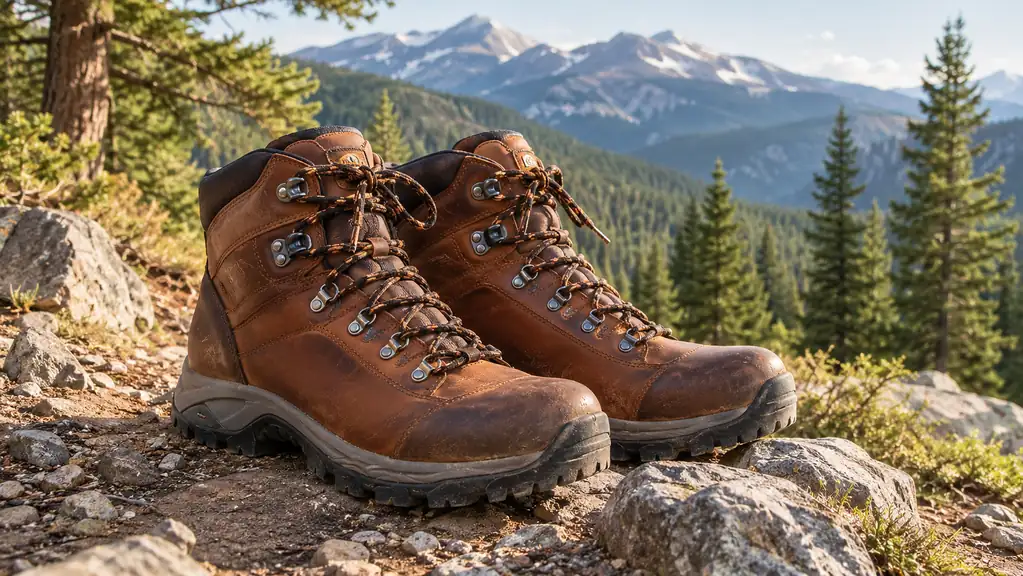
I spent thirty years teaching middle school science, and the one thing that never changed was the last week of April. That's when I look at my hiking boots and decide whether they have one more season in them. This year the answer was no. The generic pair I'd been wearing had finally worn out, so I ordered the Merrell Moab 3 Mid Waterproof and started the whole cycle over again. I'm not a thru-hiker or a peak bagger. I'm the person who hikes most weeks from May to October, carries a daypack on the long ones, and takes two or three short backpacking trips each summer. I need a boot that does all of that without demanding much from me.
Two weeks of short walks near home, and then I stopped thinking about my feet. That's the real test. Over the next seven months, from April to October, I put about 300 trail miles on these boots. Here are ten reasons the Merrell Moab 3 Mid earned its place as my only hiking boot. If you're an everyday hiker like me, this is what I learned.
The boot that carried me 300 trail miles this season
If you want one boot for day hikes and weekend trips, this is the one I'd start with. I bought mine in the first week of April and wore them through October. No blisters, no drama, no second pair waiting in the closet.
Amazon Check Today's Price on Amazon →It stopped feeling new after two weeks
The first few days were what you expect from a new boot: a little stiff, a little unfamiliar. I wore them on short walks near the house, nothing more than a mile or two. By the end of the second week, they felt like they'd been on my feet for years. No blisters, no hot spots, no breaking-in drama. My old boots took the better part of a month to settle, and I never loved them. These were different from the start.
Waterproof that doesn't turn into a sauna
The spec sheet says waterproof, and it means it. I've crossed wet grass at dawn, hiked through light rain, and stepped into more than one puddle that turned out to be deeper than it looked. My feet stayed dry every time. The mesh lining means it doesn't trap heat the way some waterproof boots do, so my feet weren't swimming by the end of the day. On a warm afternoon I can feel the difference compared to my old boots, which might as well have been rubber bags.
Maximum cushioning that holds up on long days
The listing calls the cushioning level maximum, and that's not marketing fluff. On eight-mile days my feet feel less beat up at the trailhead than they did in my old boots. The foam insole takes the edge off rocky sections, and the cushioning hasn't flattened out after a season of use. I notice it most on the walk back to the car, when my feet are the last thing I'm thinking about.
The mid cut is supportive without feeling heavy
I chose the mid version on purpose. The collar comes up high enough that I feel planted on uneven dirt, but it doesn't feel like a mountaineering boot. On loose gravel and rocky descents, I notice the difference. My left knee still gets sore on long downhills, and I reach for my Black Diamond Trail poles on those days, but the boot gives me a stable platform to work from. I don't expect a boot to fix my knee, and this one doesn't pretend to. It just keeps my foot where I put it.
Leather and mesh that breathe on warm days
The outer is leather, which holds its shape and sheds water, and the lining is mesh, which lets air move. That combination matters in Montana, where a morning can start at 40 degrees and end at 75. My feet stayed comfortable through the swing instead of feeling like they were in a plastic bag. On the warmest days I still wouldn't call them cool, but they're a long way from my old boots.

Lace-up closure I can actually dial in
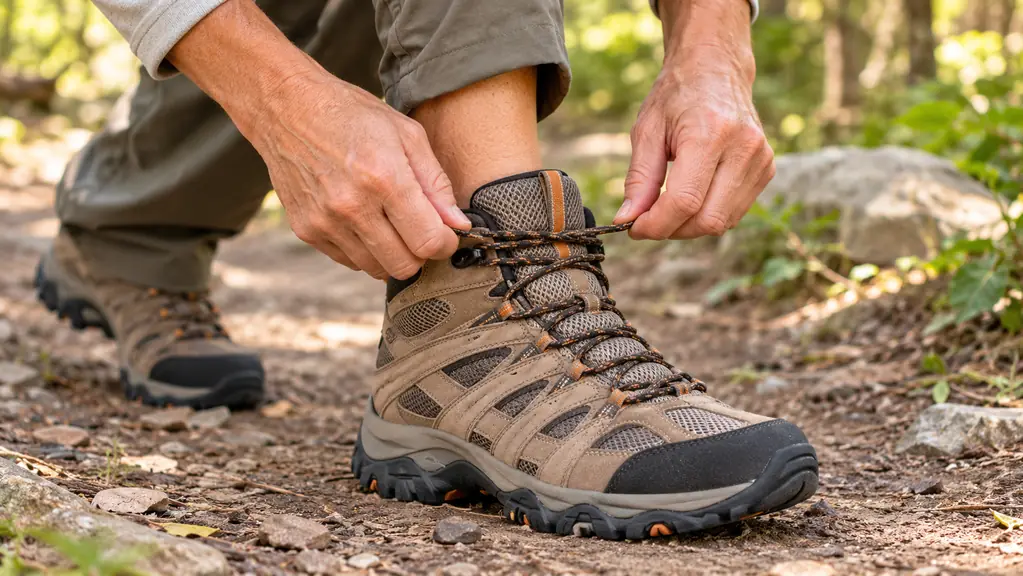
I have a slightly wide forefoot, and that's where most boots fail me. The lace-up closure on these lets me loosen the front and snug the ankle, so I get a secure heel without squeezing my toes. It's a simple system, and it works. I retie once at the trailhead and don't think about it again. The laces stay put, which sounds like a small thing until you've stopped three times on one hike to fix a slipping knot.
Neutral and flat, which suits a lot of feet
The specs list neutral pronation correction and a flat heel, which is exactly what I need. I don't require motion control, and I don't want a heel that pitches me forward. The flat platform feels natural on the trail, and it's part of why the boot disappeared from my mind during a hike. The best thing I can say about any piece of gear is that I stop noticing it, and these boots do that.
A plain toe that doesn't crowd my forefoot
It's not a wide model, so don't read this as a recommendation for truly wide feet. But the plain toe leaves enough room that my forefoot isn't squished on descents, which is where I usually feel pressure. For a standard-width boot, it's about as roomy as I've found. I sized down half a size in a different boot once and regretted it for two years. These fit my usual size 9 without complaint.
Built for dirt trails, fine for town
The surface recommendation says dirt, and that's where these boots live. They handle the rocky, rooty trails around Missoula without complaint. They also don't look out of place when I stop for groceries on the way home, which matters more than I'd like to admit. Tom teases me about it, but a boot that works on the trail and in the parking lot is one less thing to think about.
One boot, one full season, about 300 miles
I bought these in the first week of April after retiring my old pair, and I wore them on nearly every hike from then through October. About 300 trail miles, one full season, and they're still going. The tread still has life, the waterproofing still holds, and the cushioning still feels like it did in May. That's the real reason they're my only hiking boot now.
What I'd Skip
No boot is right for everyone, and I'd be lying if I said this one has no limits. If you carry very heavy loads off-trail, you'll want a taller, stiffer boot. If you have a narrow heel that slips in most footwear, try these on before you buy, because the plain toe runs a little generous. And if you hike in deep winter, these are listed for fall, not for snow and ice. I also wouldn't treat the waterproofing as a license to wade through streams. It handles rain and wet grass, but it's a hiking boot, not a wading boot. Know what you're buying, and you'll be happier with it.
Two weeks of short walks, then about 300 trail miles from April to October. That's the real test, and the Merrell Moab 3 Mid passed it.
I keep coming back to the same conclusion. The Merrell Moab 3 Mid isn't the flashiest boot on the shelf, and it doesn't try to be. It's a solid, comfortable, waterproof boot that does exactly what an everyday hiker needs it to do, week after week. After about 300 miles, that's the highest praise I can give.
Ready for a boot that does the whole season?
The Merrell Moab 3 Mid Waterproof carried me through a full season of Montana trails. Check today's price and see if it's the right fit for your feet.
Amazon Check Today's Price on Amazon →