
I bought the Sawyer Mini in the first week of April, the same week I retired the filter I had carried for years. Seven months later, after three backpacking trips and more long day hikes than I can count in western Montana, I have a clear picture of what it does well and what it does not. This is the review I wish I had read before I bought it, because the Amazon listing makes it sound like the only filter you will ever need. It is a very good filter. It is not the only filter you will ever need, and pretending otherwise does nobody any favors.
Let me be plain about my situation so you can judge whether my experience applies to yours. I am Nell Brandvold, I am 59, and I have been hiking for about thirty years. I live outside Missoula, Montana, and I hike most weeks from May to October, plus two or three two-to-three-night backpacking trips each summer. My husband Tom hikes with me on most trips and drinks from the same filter I do. I carried the Sawyer Mini on every overnight trip this season and on long day hikes where I wanted to refill from a stream. I backflushed it after every trip with the included plunger, the way the instructions say, and I never once had to replace a part.
The Quick Verdict
A genuinely light and reliable filter for streams and lakes, with a flow rate you should know about before you buy. I trust mine; I just do not expect it to be fast.
Amazon Check Today's Price →The filter I trusted for a full Montana season
Seven months, three backpacking trips, a dozen long day hikes, and the Sawyer Mini still filters as well as the day I opened it. If you hike where the water comes from snowmelt and springs, this is the filter to beat.
Amazon Check Today's Price on Amazon →How I've Used It
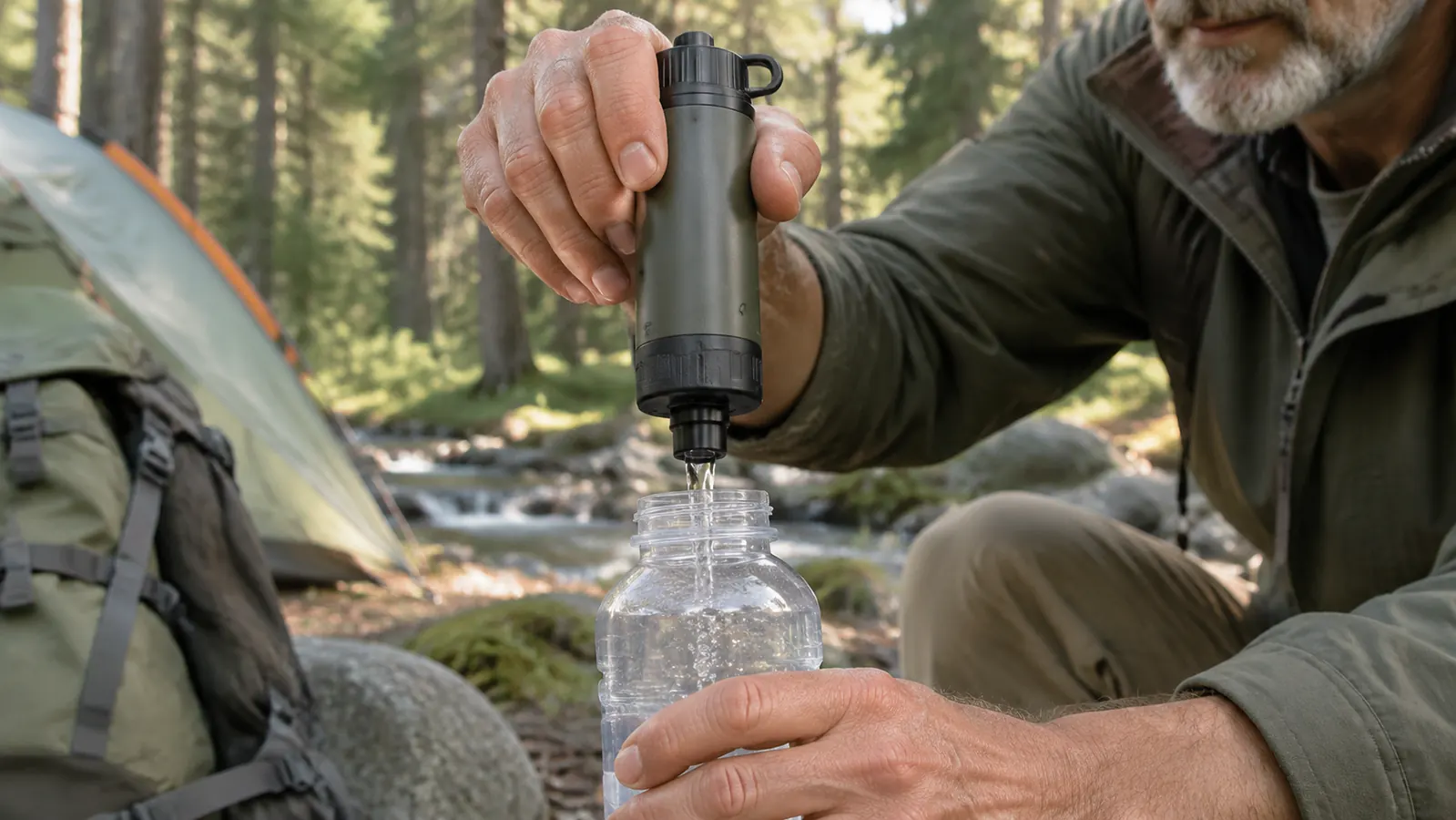
In practice, here is how I used it. On backpacking trips I carried the included 16-ounce pouch and a spare squeeze bottle. I filled the pouch from the stream, screwed the Mini onto it, and squeezed the water through the filter into the bottle. The flow rate surprised me, and not in a good way at first. It is steady, but it is not fast. The harder you squeeze, the faster it goes, and after a climb your hands get tired. On our first overnight in May, I timed myself filling a two-liter bottle at the stream: just over nine minutes of steady squeezing, and my right hand was complaining by the end. I learned two things that day. Start filling before you are thirsty, and let the pouch rest a few seconds between squeezes so the water can catch up. By August the rhythm felt natural, and the flow rate stopped bothering me. What I can tell you is that after a full season, the flow had not slowed down. Sawyer rates the filter for 100,000 gallons, which is a number I cannot test in one lifetime, but the filter behaved like new in month seven.
The whole setup weighs almost nothing. The filter itself is 41 grams, which the listing rounds to 2 ounces. The pouch adds a little more, and the straw and plunger are trivial. I keep the Mini in my small daypack on long day hikes, and I genuinely forget it is there until I need it. That matters to me more than it used to. At 59, I notice every ounce on my hips, and I notice every minute spent standing at a stream even more.
One more habit worth mentioning: I used the included straw to drink directly from a stream a few times on hot days. You attach the straw to the filter, drop the end in the water, and sip. It works exactly the way the listing says, and it is the fastest way to get a drink when you do not want to stop and squeeze. I felt slightly ridiculous doing it in front of other hikers, but I was thirsty, and it worked.
What the Sawyer Mini Does Well
The first thing to say is that it works. I filled it from snowmelt streams, from a lake that had geese on it, and from a creek that ran through a cattle pasture upstream. I am still here, and so is Tom. I want to be careful with that sentence. A hollow fiber filter does not remove viruses or dissolved chemicals, and I never claim it makes all water safe. But for the water I drink in Montana, which is cold, moving, and high, the Mini does the job it is rated for, trip after trip.
The second thing is the bottle system. The Mini screws onto standard 28 mm disposable water bottles, which means I can buy a bottle of soda at a gas station, drink it, and use the empty bottle as a spare container for the rest of the trip. It also attaches to hydration packs, though I have to admit I never used that feature. I am a squeeze-bottle person. But I like knowing the option is there.
The third thing is maintenance, and this is the part that surprised me most. The cleaning plunger is not a gimmick. You backflush the filter by forcing clean water backward through it, and it takes about two minutes. I did it after every trip, and I never had a clog, even after filtering silty creek water. There are no cartridges to replace, no parts to buy, no expiration date to track. The filter is the whole system, and it is rated for 100,000 gallons. For a person who hates gear that needs constant attention, that is a real selling point.
What a Season of Use Taught Me
The biggest surprise of the season was how little I thought about the filter. On the first trip in early June I fussed over it, checking the threads, worrying about the pouch, timing the flow. That first night I woke at 2 AM worrying I had left it out where it could freeze, even though the temperature never dropped below fifty. I checked it twice before breakfast. By the third trip, filling water was just part of the camp routine, like setting up the tent or hanging the food bag. On the last trip in early October, I filled the bottles, backflushed the filter, and did not think about it again until we were home. That is the highest compliment I can pay a piece of gear. The best tools are the ones you stop noticing, because they simply do their job.
The other thing I learned is that the Mini rewards a little patience and a little planning. I filled my bottles at every reliable stream, even when I was not thirsty, so I never had to squeeze a full two liters at the end of a dry day. That habit made the slow flow rate a nonissue. If you are the kind of hiker who plans water ahead, the Mini will not slow you down much. If you are the kind who waits until you are out, it will.
What Nobody Tells You Before You Buy
Here is the honest part, and the reason this review exists. The Sawyer Mini is slow. Not broken, not defective, just slow. The flow rate is governed by how hard you can squeeze the pouch, and after a mile of climbing, your hands get tired before the pouch is empty. Filling a two-liter bladder from a stream takes me about ten minutes of steady squeezing. On a hot afternoon, that is a long time to stand in the sun with a half-empty bottle.
The second thing nobody tells you is that the included pouch is small. Sixteen ounces is half a standard water bottle. On a three-day trip, I filled that pouch dozens of times. On the July trip I counted one evening, and I had filled that pouch eleven times just to get dinner water and enough for the morning coffee. Tom stood there with the map while I squeezed, and we both laughed about how the filter had become the bottleneck of our camp routine. It works, but you develop a rhythm: squeeze, unscrew, refill, squeeze again. If you want to carry two liters of water for a dry stretch, you will spend a while at the stream. The fix is to carry a spare squeeze bottle, which I did, but it is worth knowing before you buy that the kit as it ships is built for one person filling one bottle at a time.
The third thing is the one that almost nobody mentions in reviews, and it is the reason I almost did not write this article. The Mini does not remove viruses. The listing is honest about it, but the marketing language is easy to skim past. The long special-features sentence is all about bacteria and protozoa. If you travel outside the lower 48, or if you are filtering water where human waste is a real concern, you need a filter that also handles viruses, and this is not that filter. I am not saying that to be dramatic. I am saying it because a hiking friend of mine learned that lesson on a trip abroad, and I would rather you read it here than learn it there.
The fourth thing is cold weather. The filter is a hollow fiber membrane, and hollow fiber membranes can be damaged by freezing. Sawyer is clear about this, and I took it seriously. On cold nights I slept with the Mini inside my sleeping bag, which sounds fussy until you price a replacement. On the October trip, the temperature dipped below freezing two nights in a row. I zipped the Mini into the foot of my sleeping bag both nights, and the filter came through fine. But it is a limitation, and limitations belong in reviews.
The fifth thing is smaller, but it annoyed me enough to mention. Filling the included pouch from a shallow stream takes patience, because you have to find a spot where the water is deep enough to fill it properly. You learn to look for a little pool or a spot below a rock. It is a small thing, and it did not change my opinion of the filter. But it is exactly the kind of detail that reviews leave out, and this is the review that does not.
What I Liked
- Removes bacteria and protozoa down to 0.1 micron absolute, including E. coli, Salmonella, Giardia, and Cryptosporidium
- Weighs 41 grams and fits in the palm of your hand
- Rated for 100,000 gallons, and my flow never slowed in a full season
- Screws onto standard 28 mm bottles and works with hydration packs
- Backflushes in about two minutes with the included plunger; no cartridges to replace
Where It Falls Short
- Slow flow rate; filling two liters takes real time and grip strength
- Does not remove viruses or dissolved chemicals
- Included pouch holds only 16 ounces
- Must not freeze, which complicates cold-weather trips
After a full season of Montana streams and lakes, the flow had not slowed down, and neither Tom nor I ever got sick. That is the experience that matters.
The Numbers That Matter
Let me put the specs in plain language, because the Amazon listing buries them. The Mini filters to 0.1 micron absolute. That is the number that does the work. Bacteria are too big to get through, protozoa are too big to get through, and microplastics are too big to get through. The listing says it removes 100% of microplastics, which is a nice bonus in a world where that stuff is everywhere, even in mountain lakes.
The capacity rating is 100,000 gallons. I want to be honest about that number: I cannot verify it, and I doubt most people will ever get close to it. What I can verify is that after seven months of regular use, including a lot of silty creek water, the flow rate had not dropped. I backflushed after every trip, and the Mini behaved like new. That is the experience that matters, and it is the reason I would buy it again.
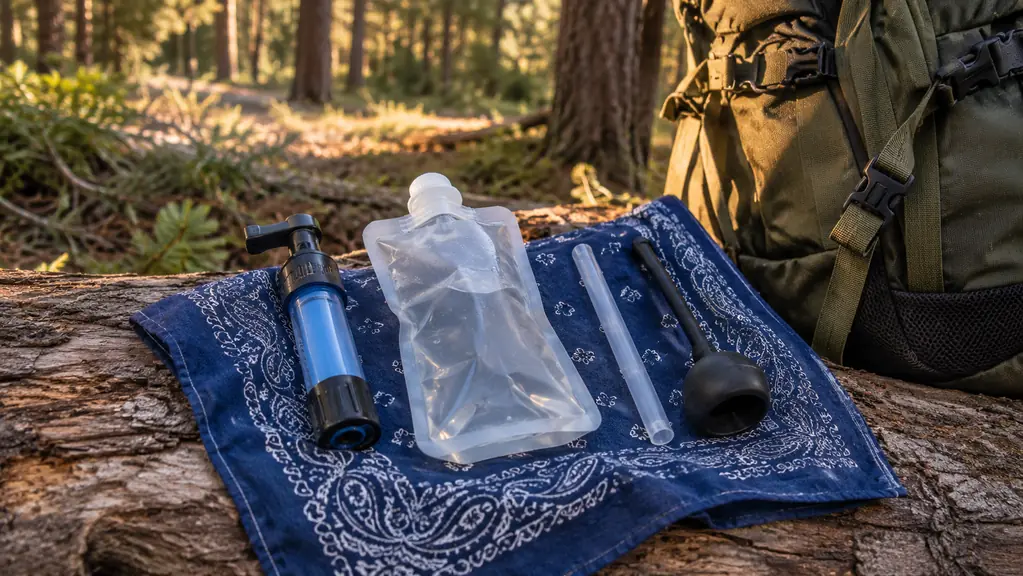
One more number: the filter weighs 41 grams, and the whole kit, including the pouch, the straw, and the plunger, fits in a space about the size of a deck of cards. I put the whole kit on the kitchen scale before the May shakedown: the filter, the pouch, the straw, and the plunger together came to less than my wallet. On the trail, I kept it in the front pocket of my daypack, and I never once adjusted my hipbelt because of it. I weighed my daypack at the start of the season and again at the end, and the Sawyer setup added less than any other piece of gear I carried. For a person who counts ounces, that is the quiet advantage of this filter.
Who This Is For
Buy the Sawyer Mini if you are a day hiker who wants a lightweight safety net, or a backpacker who filters from streams and lakes in the lower 48 and does not mind spending ten minutes at the water source. Buy it if you want a filter that never needs cartridges, costs almost nothing to maintain, and will outlive your hiking boots. Tom and I are exactly that kind of hiker. We are not fast, we are not ultralight, and we do not need to fill a bladder in ninety seconds. We need clean water and a filter that does not weigh us down.
Who Should Skip It
Skip the Sawyer Mini if you filter for a group, if you need water fast, or if you are heading somewhere with virus risk. For a group of four, the slow flow will test everyone's patience, and the included pouch will feel like a toy. For a trip where you need three liters before dark, a gravity filter or a pump will save you an hour a day, and that hour matters when the trail is long. And if you are traveling outside the lower 48, choose a filter that handles viruses. The Mini is a tool with a specific job. If your job is different, this is not the tool, and there is no shame in buying the right one.
Still the filter I reach for every trip
The Sawyer Mini has limits, and now you know exactly what they are. For the hiking I do in Montana, it has been the right filter all season. See today's price and decide whether it fits your trips.
Amazon Check Today's Price on Amazon →