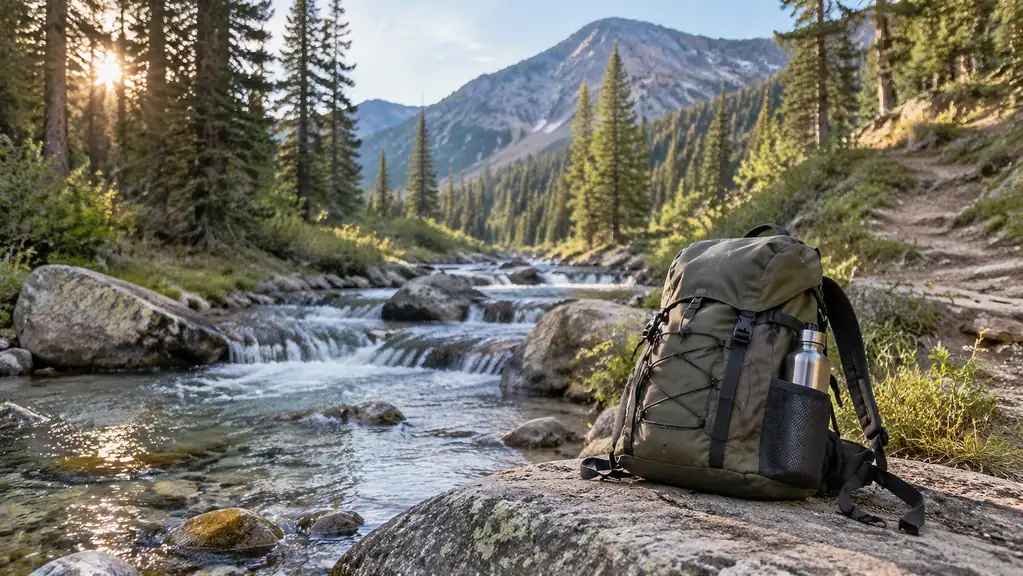
The moment I knew I trusted the Sawyer Mini came in late September, on the last overnight trip of the season. I was kneeling on a gravel bar beside a creek in the mountains south of Missoula, about nine miles from the trailhead. I filled the little pouch, squeezed it through the filter into my bottle, and drank without a second thought. That is not how I usually am with backcountry water.
I taught middle school science for thirty years, which means I spent three decades telling kids exactly which organisms live in untreated water and what they do to a person. I am not naturally casual about this. So when I bought the Sawyer Mini in the first week of April, right after retiring my old filter, I planned to test it carefully all season. By the end of October, it had been with me on every long day hike and every overnight trip, from the first muddy thaw to the last cold snap.
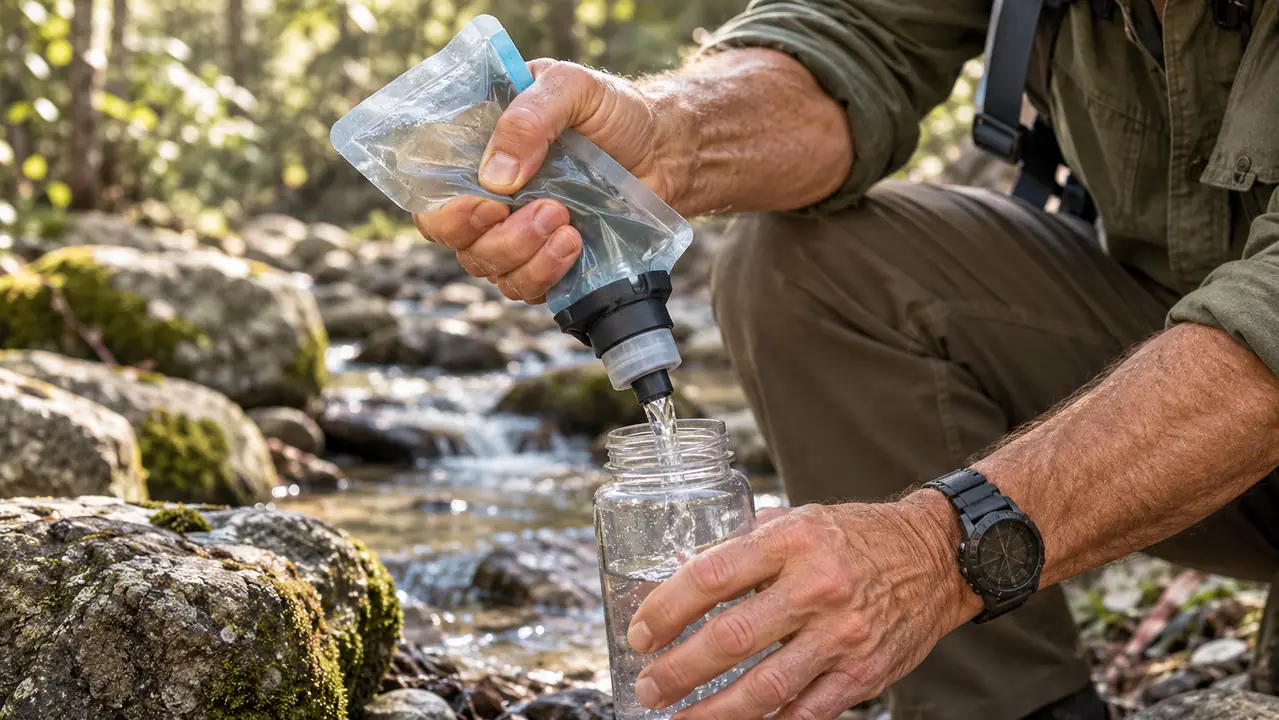
The whole system is simple. The filter screws onto the included 16-ounce pouch, or onto a standard 28 mm disposable water bottle, or onto a hydration pack, or you can use the drinking straw and drink straight from the source. It fits in the palm of my hand and weighs about two ounces. Most days I used the pouch. I would scoop, squeeze, and drink, and I carried a spare squeeze bottle for extra water at camp. Tom drank from the same filter all season.
Here is what the science teacher in me wants you to know. The filter uses a hollow fiber membrane with a 0.1 micron absolute rating. That is small enough to remove 99.999999% of bacteria, including Salmonella, Cholera, and E. coli, and 99.9999% of protozoa like Giardia and Cryptosporidium. It also removes 100% of microplastics. The listing says it is good for 100,000 gallons, which is more water than I will filter in the rest of my hiking life.
It does not remove viruses or chemical contamination, and I would never tell you it makes all water safe. I still pick my water sources the way I always have: moving water, high up, away from campsites and meadows where animals graze. The filter is one layer of good judgment, not a replacement for it.
Three days, four creek fills, and not one upset stomach between the two of us. That is the only test that counts.
The filter that came on every trip this season
After seven months and one full season of trail miles, the Sawyer Mini is the piece of gear I reach for without thinking. It holds a 4.7-star rating from more than 41,000 reviews. See today's price and decide if it belongs in your pack.
Amazon Check Today's Price on Amazon →The trip that settled it for me was a three-day loop in September. We had planned the route around water, as you do, but the first two creeks we reached were running low and warm, the kind of water I would have filtered twice with the old setup. With the Sawyer I just found a spot where the current moved, filled the pouch, and squeezed. It took maybe a minute per liter. I remember standing there thinking that the old filter would still be dripping into a bottle while I packed up camp.
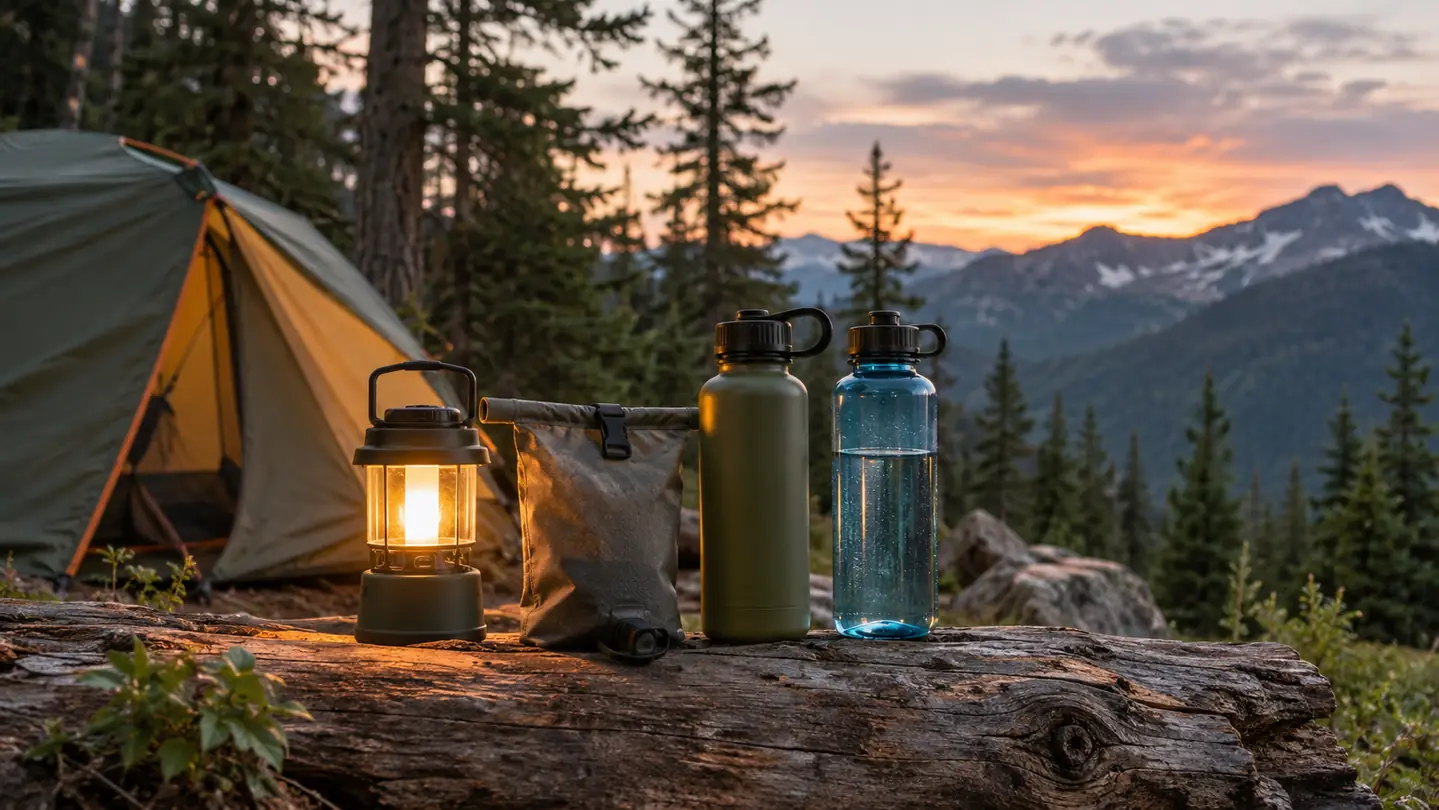
The other thing I came to appreciate is the cleaning routine. The filter comes with a cleaning plunger, and I backflush it after every single trip, the way the instructions say. It takes about two minutes at the kitchen sink. I also learned to backflush it on the trail if the flow slowed, and that fixed it every time. A filter is a tool, and tools work better when you take care of them. That is the kind of sentence I used to write on the chalkboard, and it is still true.
I thought about the weight more than once. Two ounces is nothing. My old filter lived at the bottom of my pack because it was a chore to dig out. The Sawyer lives in the top pocket of my daypack because it is small enough that I forget it is there until I want it. That is the difference between gear you carry and gear you use. I used this one on every long day hike from May to October, and on all three of my overnight trips.
The day hike that sold me was in August, a hot fourteen-miler with no reliable water until the halfway point. I had the Sawyer in my daypack, and at the creek I filled the pouch twice, once for me and once for the bottle I carried out. My pack weighed almost nothing extra. I remember thinking that ten years ago I would have carried two liters from the car and rationed them. Now I just stop at the creek.
I will not pretend the pouch is fancy. It is a simple 16-ounce pouch, and I built my habits around it: I kept a spare squeeze bottle in the car, and I rinsed the pouch and let it dry when I got home. That is the whole maintenance routine. For a piece of gear that sits between me and creek water, I want boring and reliable, and that is exactly what this has been.
What I'd Tell You If We Were Sitting at My Kitchen Table
If we were sitting at my kitchen table with coffee, here is what I would say. You do not need the biggest or the most complicated filter. You need one you will actually carry and one you will actually clean. The Sawyer Mini is small enough to live in a daypack, simple enough that my husband uses it without asking questions, and honest about what it does and does not do. It will not remove viruses or chemicals, so keep using your judgment about where you fill it. But for bacteria, protozoa, and microplastics, it has done its job for me every single time this season. I bought it in April, used it through October, and I am already looking forward to the first trip next spring.
Start next season with clean water in your pack
The Sawyer Mini earned its place in my pack over seven months of trail miles. If you are ready to lighten your load, check today's price on Amazon.
Amazon Check Today's Price on Amazon →