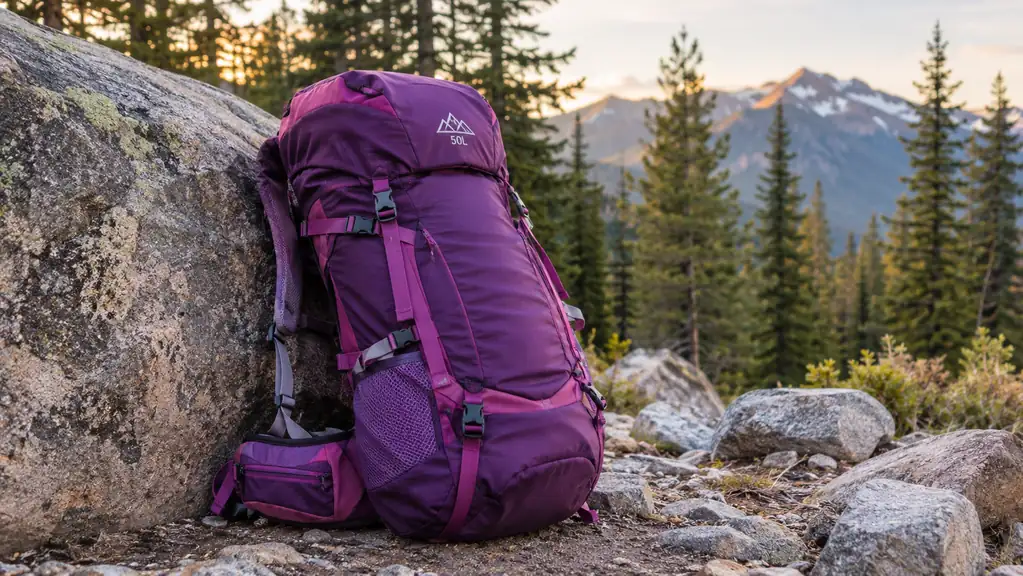
I am going to tell you something that most reviews of the Osprey Renn 50 leave out: the first trip with this pack will probably annoy you. Not because it is a bad pack. Because it is a pack that asks you to learn it before it starts working for you, and almost nobody says that part out loud. I bought mine in the first week of April, used it on an overnight shakedown in May, and then carried it on three backpacking trips this summer, each two to three nights. By the third trip I understood why people love it. I also understood what I would tell a friend before she spent her money.
I am Nell Brandvold. I have been hiking for about thirty years, mostly day hikes from my home outside Missoula, Montana, plus two or three backpacking trips every summer. I am not a thru-hiker and I am not a gear collector. I am the person who reads the specs, buys one good thing, and uses it until it wears out. That is the perspective this review comes from.
The Quick Verdict
The Osprey Renn 50 is a well-built, comfortable pack once you get the fit dialed in, but the hipbelt takes real time to settle and the pockets are fewer than the photos suggest. Buy it for the AirSpeed suspension and the integrated raincover. Do not buy it expecting to organize everything in separate compartments.
Amazon Check Today's Price →If you want a pack that breathes on your back and carries its own raincover, the Osprey Renn 50 is worth a close look.
I have used mine on four overnight trips this season and it has held up through everything from a wet May shakedown to a hot August traverse. Check today's price on Amazon to see the current color options and fit details.
Amazon Check Today's Price on Amazon →How I Used It
I bought the Osprey Renn 50, a 50-liter pack, in the first week of April, new, for myself, after retiring the old pack I had carried for years. My first outing was an overnight shakedown in May, a short hike into a familiar campsite so I could fiddle with the straps without being miles from the car. Then I used it on three backpacking trips over the summer: two nights here, three nights there, all in the mountains around western Montana. Total, about seven months of owning it and four trips of actual overnight use.
For context, I am 59, I wear a women's size 9, and I have a slightly wide forefoot, though that matters more for boots than packs. My husband Tom carries his own pack on these trips, so the Renn carries only my gear: my sleeping bag, a lightweight tent, food for two or three days, extra layers, and my Sawyer Mini filter. I am not a gram counter. My base weight is ordinary. If this pack can handle my load, it can handle most weekend backpackers' loads.
To give you a sense of what ordinary means, I weighed my load once on the August trip, just out of curiosity. Fully loaded for three days, with a liter of water on the side, it came to just under 28 pounds on the first morning. That is not a light load and it is not a heavy one. It is what a normal person carries when they pack food, a tent, and clothes for a long weekend without weighing every item. The Renn carried it without complaint, and more importantly, it carried it comfortably once the hipbelt was set. I mention the number because a lot of pack reviews are written by people with nine-pound base weights. I am not one of them, and you probably are not either. That number matters because it tells you what this pack is for: real loads, real trails, and people who carry their own food.
What Nobody Tells You About the Fit
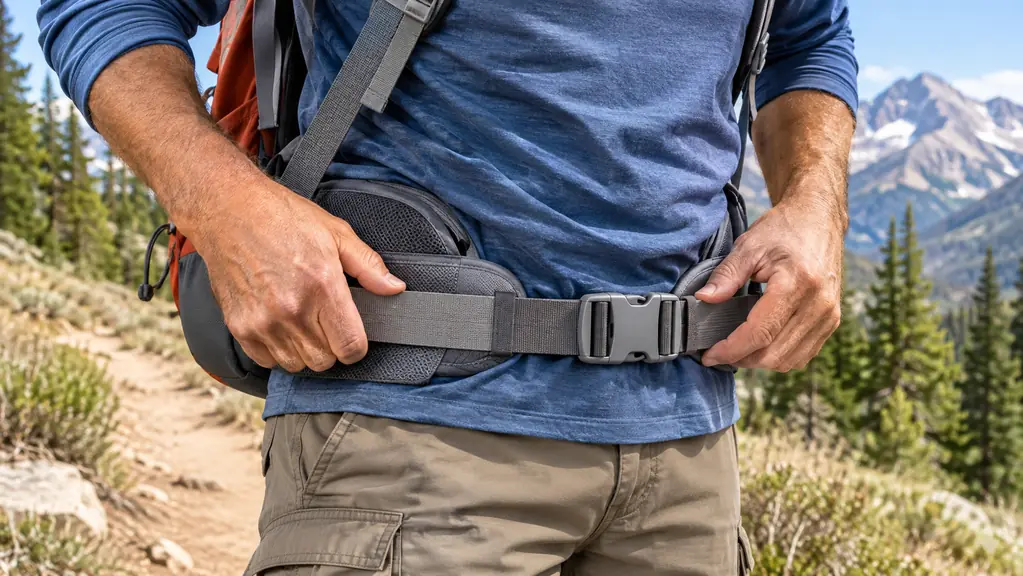
Here is the honest part. The first two trips, I could not get the hipbelt to sit where I wanted. The Osprey Renn 50 has an adjustable AirSpeed suspension, a tensioned backpanel that adjusts for a variety of torso lengths, and that adjustability is genuinely useful. But it also means there are more moving pieces to fiddle with than on a pack that just has one fixed setting. I am not someone who enjoys fiddling. I wanted to load it, put it on, and go.
What I learned is that the hipbelt needs to be settled while the pack is loaded, not before. If you tighten it on an empty pack, then load it, the weight sits differently and you start over. The trick that finally worked for me: load everything, put the pack on, and spend two full minutes walking in a circle at the trailhead while I adjusted the hipbelt and the shoulder straps together. That sounds obvious, but I had never done it deliberately before, and it changed how the pack felt on trip three.
The AirSpeed suspension also does what it claims. The tensioned backpanel keeps the pack off your back, and on a hot August day I noticed the difference. I am the person who shows up to every hike with a sweaty back, and with this pack, my back stayed noticeably drier than it had with my old pack. That is not a small thing on a three-day trip in August.
The other thing I learned the hard way: adjust the backpanel before your first trip, not during it. The specs say the panel adjusts for a variety of torso lengths, and it does, but the adjustment takes a few minutes with the instructions in your hand. On the June trip I skipped that step, and I paid for it with a sore lower back by the second day. I had loaded the pack on the tailgate of my Subaru and tightened everything while it sat on the bumper, which put the hipbelt in the wrong place before I even stood up. When I got home I moved the panel to fit my torso, and the difference was immediate. On the August trip I did not think about my back once. That is the whole point of Osprey's adjustable suspension, but only if you actually adjust it.
The Pockets: Fewer Than the Photos Suggest
The Osprey Renn 50 has seven pockets total. That sounds like plenty, and it is, but I want to be honest about what those seven pockets are and are not. This is not a pack with a dozen little organizers. It is a pack with a main compartment, a few utility pockets, and the rest is open space. If you like to know exactly where your headlamp is at 2 a.m., you will need to add your own stuff sacks or pouches.
The pocket description in the specs says utility pocket, and that is the right word. The pockets are useful, but they are general-purpose. I ended up using one for my filter and water treatment, one for my headlamp and knife, and the rest for whatever did not fit elsewhere. It worked, but it took me a trip to figure out my system. I would not call the organization a strength of this pack. I would call it adequate.
The other thing nobody tells you: the main compartment is deep. The pack stands 27.6 inches tall, and small items have a way of working down to the bottom. On the June trip I packed my sleeping bag in first, then my tent, then my food bag on top, and I still lost my stove for five frustrating minutes when I stopped for lunch on day two. It had slid down the side of the sleeping bag. I solved the problem on the next trip by putting my stove and fuel in a small pouch and clipping it to the inside of the pack near the top. Once I had that rhythm, the depth stopped being a problem. But the first time I packed it, I dug for my stove while Tom stood on the trail with his pack on, waiting. That is the kind of thing you only learn by using the pack.
The Integrated Raincover Is the Quiet Hero
The feature I appreciate most is the integrated raincover. It stows away when you do not need it, and when the sky opens up, you do not have to dig to the bottom of your pack to find a separate cover. I used it on the May shakedown when a cold rain moved in about a mile from the trailhead. I stopped, pulled out the cover, and had the pack protected in under a minute.
The specs say the cover is integrated and removable, and that is accurate. I have not needed to remove mine, but I like knowing the option is there. For a weekend backpacker in the Pacific Northwest or the northern Rockies, where afternoon thunderstorms are a fact of life, this feature alone is worth considering. It is the kind of thing you do not think about until you are standing in the rain wishing you had bought the pack with the cover built in. I have carried separate rain covers before, and the difference is not the cover itself. It is knowing, without checking, that the cover is already on the pack. That is one less thing to remember at 5 a.m. in the dark. By the time we reached camp on the May shakedown, the rain had turned into a steady soaker, and the contents of my pack stayed dry through all of it.
What It Does Not Do Well
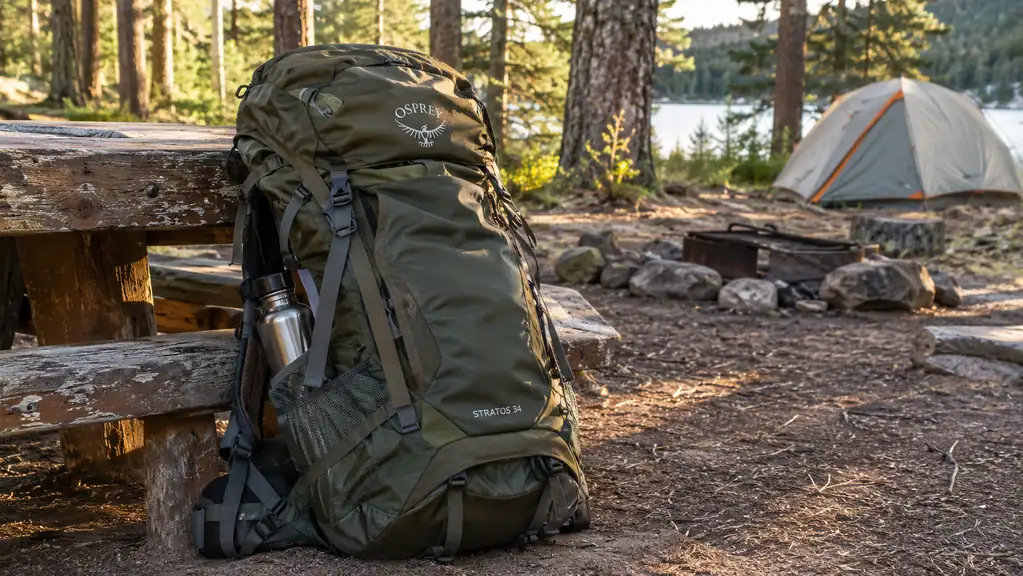
I promised an honest review, so here is the list of things the Osprey Renn 50 does not do well. First, it is not a light pack. At 3.5 pounds, it is not the heaviest pack on the market, but it is also not the kind of pack you forget you are wearing. I noticed the weight when I lifted it empty in the store. Once it was loaded and the hipbelt was doing its job, I stopped noticing, but the empty weight is real. You are trading empty weight for carrying comfort, and for me that is a fair trade. For someone who wants to feel like they are wearing nothing, it is not.
Second, the organization is basic. I already mentioned the seven pockets, but I want to emphasize that this is not a pack for people who want a pocket for every category of gear. If you are the kind of person who wants your map, your snacks, your sunglasses, and your lip balm in four separate places, you will be adding pouches. That is not a dealbreaker, but it is a fact. I added one small pouch for my daily essentials and that solved it for me. Your system will be different, but you will need a system.
Third, the hipbelt takes time. I said it at the top and I will say it again: the first two trips, I was not sure I had made the right purchase. The adjustable suspension is a feature, but it is also a learning curve. If you buy this pack, plan to spend a few hours at home walking around with it loaded before your first real trip. Do not do what I did and save the fiddling for the trailhead. By the end of the season I could get the fit right in under a minute, but that is after four trips and a lot of practice. The pack does not meet you halfway. You have to meet it.
One more thing I will mention, because the specs list snowshoeing as the sport type and it made me curious. I have not snowshoed with the Renn, so I cannot review that use. What I can say is that the same ventilation that kept my back dry in August would help anyone wearing layers in cold weather. The suspension keeps the pack off your back, which is exactly what you want when you are working hard in winter clothes. If you are buying this pack partly for winter use, that is a reasonable reason. But I am reviewing what I tested, which is summer and early fall backpacking.
What I Liked
- AirSpeed suspension keeps the pack off my back, and I noticed a real difference on a hot August trip
- Integrated raincover stows in the pack, so it is always there when the sky opens up
- Adjustable backpanel fits a variety of torso lengths and is easy to change
- Simple, sturdy build that has taken four overnight trips without a loose stitch
Where It Falls Short
- Hipbelt takes real time to settle; expect a learning curve across the first two trips
- Seven pockets are general-purpose, not organizers, and small items drift to the bottom of the deep main compartment
- At 3.5 pounds it is not a light pack, and you feel the empty weight when you lift it
The first two trips, I was not sure I had made the right purchase. By the third trip, I understood why people love this pack.
Who This Is For
The Osprey Renn 50 is for the everyday hiker who wants one pack that does the job for years. It is for the person who carries a normal weekend load, wants ventilation on warm days, and does not want to think about whether their raincover is in the car. It is for the hiker who is willing to spend a little time learning the fit because they plan to keep the pack for a long time. I am that hiker. I bought this pack to replace one I carried for years, and I expect to carry this one just as long. If that sounds like you, this pack will likely serve you well. Just give yourself the first trip to learn it, and do not judge it on the walk back to the car.
Who Should Skip It
Skip the Osprey Renn 50 if you want a pack that is ready to go the moment you put it on. The adjustable suspension is a strength, but it is also a learning curve, and some people do not want a learning curve in their gear. Skip it if you are a serious ultralight hiker who counts every ounce, because 3.5 pounds is not ultralight. And skip it if you need a pack with a pocket for everything, because the Renn is simple by design. None of those are failures of the pack. They are just reasons it might not be the right pack for you. There are lighter packs and there are more organized packs. What you are getting with the Renn is a comfortable, well-ventilated pack with a raincover that is always there. That is a specific trade, and it is a good one if it matches how you hike.
The Renn 50 is a pack you will own for years, not seasons. That is the kind of purchase worth getting right.
I have put four overnight trips on mine this season and I expect to put many more on it next year. If the fit sounds right for your torso, check today's price on Amazon.
Amazon Check Today's Price on Amazon →