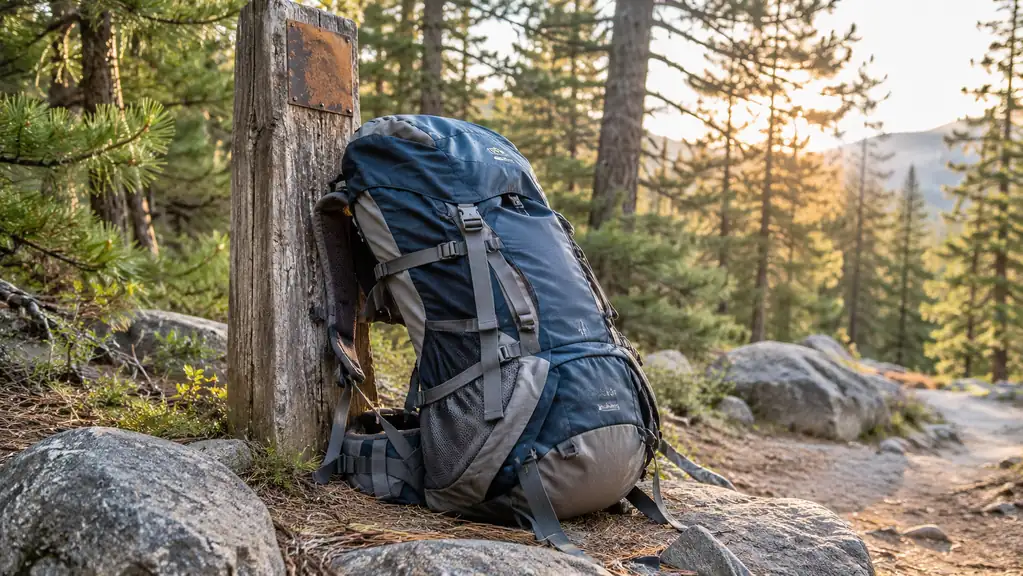
Here is the short answer, the one I wish someone had given me in April: both of these are good women's backpacking packs, and the Osprey Renn 50 is the one I chose to carry. The Osprey Kyte 48 is the pack I almost bought instead. I have tried the Kyte on in the store more than once, and I read the published specs until I had them memorized. But when it came time to spend my own money, I bought the Renn, and I have used it on every overnight trip this summer.
Let me be clear about how this comparison works. I have carried the Renn 50 on three backpacking trips this summer, each two to three nights, plus one overnight shakedown in May. I know that pack from real miles. The Kyte 48 I have only tried on in a store and studied from the listing, so I will not pretend I have hiked with it. What I can tell you is how the two packs differ on paper, how the Renn has treated me over a full season, and which kind of hiker I would point toward each one.
| Osprey Renn 50 | Osprey Kyte 48 | |
|---|---|---|
| Capacity | 50 liters | 48 liters |
| Carry system | Adjustable AirSpeed suspension; tensioned backpanel adjusts for torso length and vents heat | Ventilated backpanel in a women's-specific frame |
| Rain protection | Integrated removable raincover stowed in the pack | Cover included varies by year and listing; check before you buy |
| Pockets | 7 pockets, including a utility pocket | A time-tested pocket layout from a long-running line |
| Track record | A newer, streamlined design | Years of trail use and a large base of hiker reviews |
| Best for | Weekend backpackers who want a simple, adjustable pack | Hikers who want a proven women's-specific design |
How I Tested Them
I want to be straight with you about how this comparison was built, because too many gear reviews hide the difference between miles and minutes. The Renn 50 I have carried on three backpacking trips this summer, each two to three nights, plus a one-night shakedown in May. That is real trail time, with a real load, on real climbs and descents. The Kyte 48 I have tried on in the store three times, loaded with weight to see how it felt, and I have read the published specs carefully. I have not hiked with the Kyte, and I will not pretend otherwise.
That matters, because a pack that feels great in a store can feel very different at mile eight with thirty pounds in it. The store tells you about the fit. The trail tells you about everything else. So treat the Renn half of this review as field-tested and the Kyte half as a careful first impression from a hiker who knows what to look for. If the Kyte is the pack you are leaning toward, I would find a way to load it up and walk a few miles before you commit. That is the same advice I would give about any pack, including the Renn.

Where the Renn 50 Wins
The first thing I noticed about the Renn is the backpanel. The AirSpeed suspension uses a tensioned panel that is adjustable for a variety of torso lengths, and that adjustability is the reason I bought it. I am a 59-year-old woman whose torso does not line up neatly with any one size on a chart, and I have spent too many years fighting packs that sat either too high or too low. With the Renn, I loosened the panel, moved it to where it needed to be, and the pack stopped being something I thought about. It also keeps the pack off my back, so on a warm June day I do not end the afternoon with a soaked shirt.
The integrated raincover is the feature I did not know I needed until I needed it. Afternoon thunderstorms are a fact of life in Montana, and the cover lives in the pack, comes out in about ten seconds, and stows again just as fast. I have used it twice this summer and stayed dry both times. The Renn also gives me seven pockets, including a utility pocket, which is exactly the right amount of organization for me. I can find my headlamp without unpacking everything, and I never lose a sock in the bottom of the main compartment. Fifty liters swallows three nights of food and my extra layers without cramming.
Where the Kyte 48 Wins
The Kyte has something the Renn cannot claim yet: time. The Kyte line has been on the trail for years, and Osprey has spent those years refining the women's-specific fit. When I tried it on in the store, I could feel that history. The harness wraps around the shoulders without any of the gaping I have felt in unisex packs, and the hipbelt sits right where a woman's hips actually are. There is a reason the Kyte has such a following among women who backpack, and it is not marketing. It is a fit that has been adjusted, season after season, based on real feedback from real hikers.
The Kyte is also a touch smaller at 48 liters, which is a genuine advantage for hikers who pack light. If you know you will never fill 50 liters, the smaller pack is the better tool, because it is easier to keep your load from shifting and easier to resist the temptation to carry more than you need. And when you are buying a pack sight unseen, the Kyte's years of user reviews are worth something real. Thousands of hikers have written about how it handles a wet week or a long day of switchbacks. The Renn is too new to have that library of experience behind it.
Why I Still Chose the Renn 50
The adjustable backpanel, the integrated raincover, and 50 liters that swallowed three nights of gear without a fight. After a full season, it is the pack I reach for every time.
Amazon Check Today's Price on Amazon →What the Specs Say
Let me walk you through the numbers, because they matter more than my opinions. The Renn 50 is, as the name says, a 50-liter pack, and it weighs 3.5 pounds. That weight matters to me, because my left knee gets sore on long descents and every pound on my back is a pound my knee has to absorb. The pack is made of polyester, which has held up fine through a summer of pine branches and rocky trailheads. It measures 27.6 by 14.6 by 14.6 inches, which is a compact enough footprint that it does not feel like I am carrying a wardrobe on my back.
The seven pockets are worth a closer look, because pocket count tells you how a pack is meant to be used. The Renn has a utility pocket for the small stuff, plus the main compartment and the rest of the layout, and everything has a place. I am a teacher by training, which means I like things organized, and this pack lets me keep my rain shell, my filter, and my snacks where I can reach them without stopping. The Kyte, from what I can see in the store and the listings, uses a more traditional layout that has served hikers well for years. Neither approach is wrong. They are just different ways of thinking about organization.
The dimensions tell you something about how the pack carries. At 27.6 by 14.6 by 14.6 inches, the Renn is tall and narrow rather than wide and round, which means it does not catch on tree branches the way some packs do, and it fits through the space between two seats in the car without a fight. I drive an older Subaru Outback, and the Renn slides into the back without me having to rearrange everything else.
What Two Trips Taught Me
I will be honest about the first trip. I took the Renn on an overnight shakedown in May, and I did not have the hipbelt or the load settled. The pack rode a little low, and I stopped twice to fiddle with it. On the second trip, something clicked. I tightened the hipbelt first, then the shoulder straps, then let the load settle into place, and the pack disappeared. That is the highest compliment I can give a pack: I stopped thinking about it. By the third trip, a two-nighter in July, I was loading it the same way every time and it carried like it had been made for me.
The other thing the trips taught me is that the raincover earns its keep even when it does not rain. I have used it twice in actual storms, and both times my gear stayed dry. I have also used it once as a ground cloth when I needed to set my pack down in the mud, which is not what Osprey designed it for, but it handled the job. The polyester fabric has a few scuffs from being dropped on granite, but no tears and no broken zippers. After about seven months of use, from April through October, the pack looks like it has been used, which is exactly what I want from gear.
Who Should Buy Which
Buy the Osprey Renn 50 if you want a pack that adjusts to fit your torso, shrugs off an afternoon shower with the integrated cover, and stays simple enough that you stop thinking about it the moment you start walking. It is the pack for hikers who want one straightforward tool that does the job without a lot of fuss.
Buy the Osprey Kyte 48 if you would rather trust a design that has been refined over many seasons, with a huge base of reviews from hikers who have put it through real miles. It is also the better choice if you know you pack light and want a slightly smaller pack that keeps your load honest.
I came within a week of buying the Kyte myself. What pushed me to the Renn was the adjustable backpanel, because I knew from years of hiking that my torso does not fit any chart perfectly. If your torso lines up with a size chart and you like the idea of a proven pack, the Kyte is a perfectly good choice. If you are between sizes, or you want a pack that can be tuned to fit, the Renn is the one I would buy again.
And if you are still torn after all of that, go back to the store and put weight in both packs. Walk around the parking lot. Adjust the Renn's backpanel first. The pack that you stop feeling is the pack you should buy. For me, that was the Renn.
What I'd Tell a Friend
If we were standing at the trailhead and you asked me which one to buy, here is what I would say. Try both on, with weight in them, before you decide. The store is where the difference shows up. The Renn will fit you if you take the two minutes to adjust the backpanel. The Kyte will fit you if your torso matches its sizing. Neither pack is a bad buy, and both will carry a weekend load well. I chose the Renn because it fits me, and after a full season of use, I have no regrets. Buy the one that fits your body, not the one that fits the marketing.
One more thing, and it is the thing I wish someone had told me years ago. The best pack is not the one with the best reviews or the most features. It is the one that fits your torso, your hips, and the way you pack. My daughter lives out of state and does most of her hiking in a different part of the country, and when she asked me about packs this summer, I gave her the same advice: try them on with weight, adjust them, and trust your back over any reviewer, including me.
See Today's Price on the Osprey Renn 50
I bought mine in April and carried it all season. If the adjustable backpanel and the integrated raincover sound like the right fit for you, check the current price on Amazon.
Amazon Check Today's Price on Amazon →