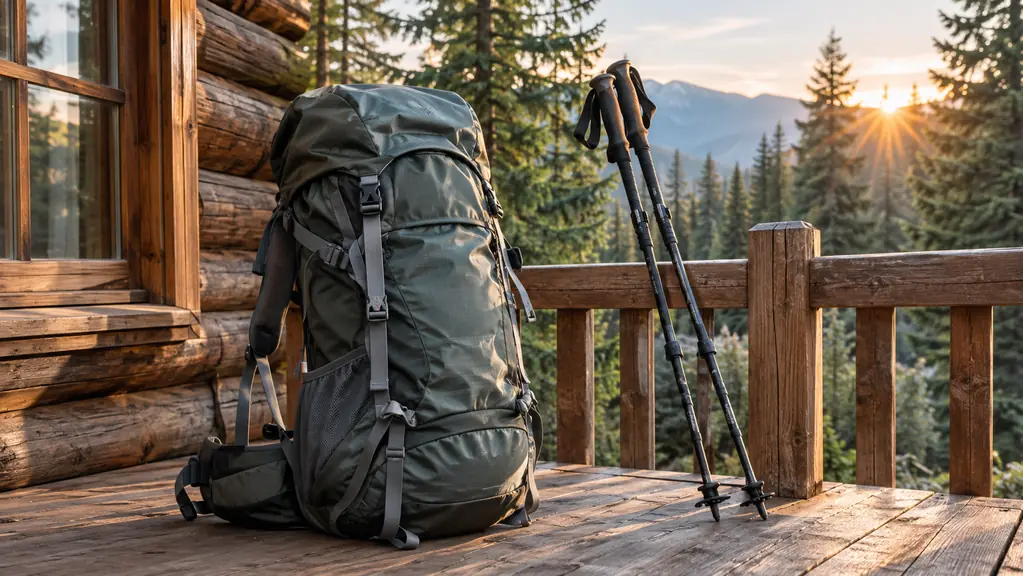
The most common mistake I see at the trailhead is not the gear. It is how the gear goes into the pack. People stuff the tent on top, the sleeping bag on the bottom, the stove somewhere in the middle, and the water wherever it fits, then spend the first mile fighting a pack that pulls backward off their shoulders. I made the same mistake my first few seasons, and I have the sore shoulders to show for it. The pack was not the problem. The packing was.
This year I switched to the Osprey Renn 50, and it took me two trips to get the hipbelt and the load settled. Once I did, the difference was not subtle. A pack that is packed the right way carries its weight on your hips, stays put when you lean forward, and does not make you stop at every switchback to tighten something. Here is the order I use now, step by step. It works for the Renn 50, and it will work for most packs in this size range.
Pack It Right the First Time
The Osprey Renn 50 is a 50-liter pack with an adjustable AirSpeed suspension, seven pockets, and an integrated raincover. Once you know where each thing goes, loading it takes about ten minutes.
Amazon Check Today's Price on Amazon →Why Packing Order Matters
Packing order is not about being neat. It is about where the weight sits. The heaviest things belong close to your back and roughly at the height of your shoulder blades. That keeps the center of gravity over your hips, where a pack is designed to carry weight. If the heavy stuff sits low and away from your back, the pack pulls backward and your shoulders take over. By mile two, your shoulders ache, your lower back complains, and every step feels like work.
The Renn 50 starts out at 3.5 pounds, so it is not a heavy pack on its own. That is a good thing, but it means your packing job does most of the work. A light pack packed badly still rides badly. The fix costs nothing but a few minutes at the car, and it saves you from a long day of fighting your own load.
Step 1: Set the Suspension Before You Load Anything
The Renn 50 uses Osprey's AirSpeed suspension. The tensioned backpanel is adjustable for a variety of torso lengths, so the first thing I do, before I load a single item, is set it for me. With the pack empty, I loosen everything, put it on, and adjust the backpanel until the shoulder straps meet my shoulders without a gap and without pressure. This takes two minutes, and it is the step most people skip.
Then I settle the hipbelt. It should sit on the bony part of my hips, not up on my waist. When I tighten it, most of the weight should settle there. On my first trip with the Renn 50, I had the backpanel set too long and the pack rode low. On the second trip, I shortened it, and the difference was immediate. The same load that had been pulling on my shoulders all day suddenly sat where it belonged.
Do this at home, not at the trailhead. Ten minutes in the living room is worth an hour of fiddling on the trail. And if you are between settings, go with the shorter one. A pack that rides a touch high is easier to live with than one that drags on your hips. You can always fine-tune it at the first break.
Step 2: Start With the Sleeping Bag at the Bottom
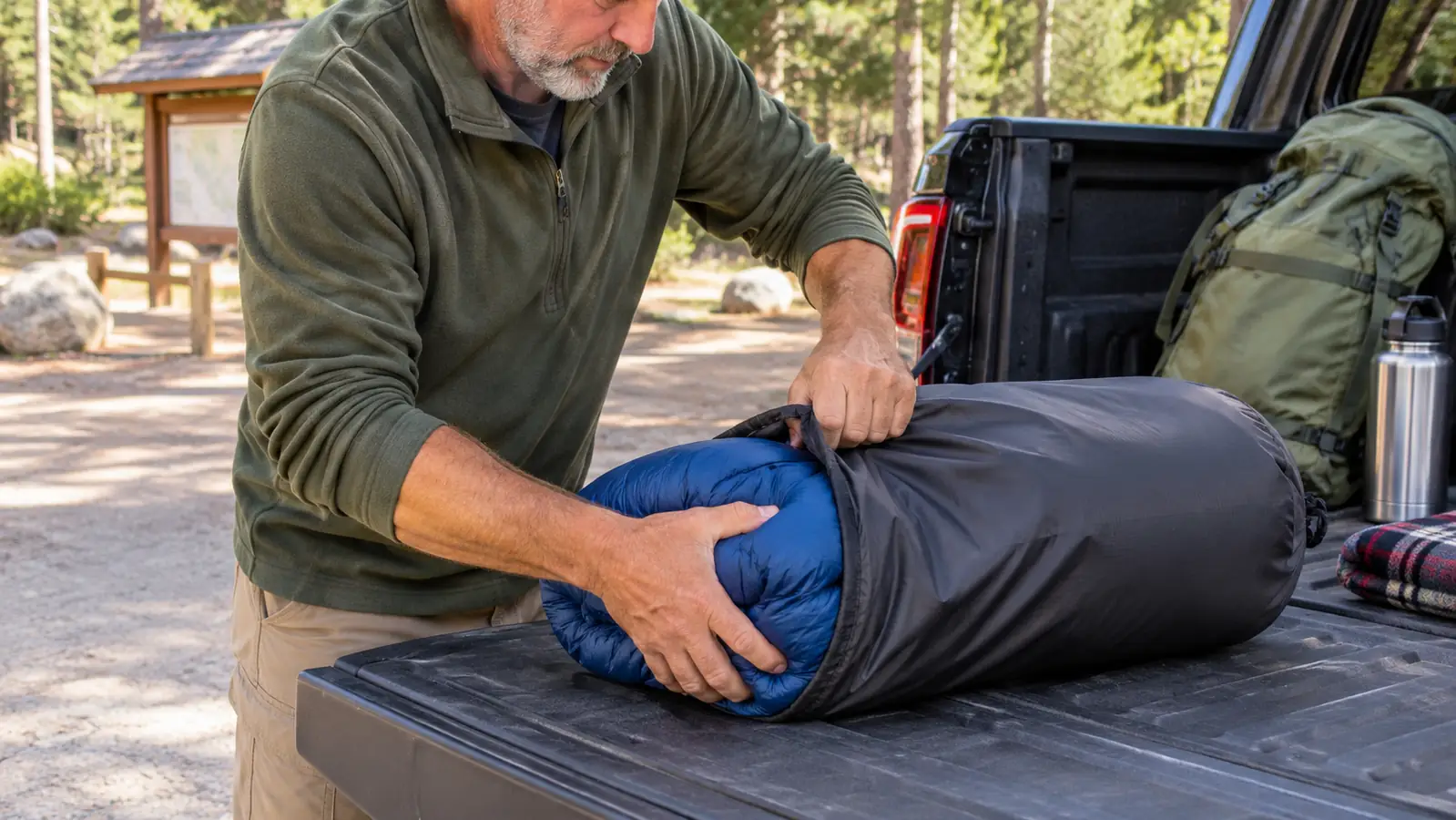
I start with the sleeping bag, and it goes in first, at the very bottom of the pack. It is the bulkiest thing I carry and one of the lightest, and it makes a good base. I do not compress it into a brick. I push it in loose so it fills the bottom corners. A loose sleeping bag also means I can pull it out at camp without unpacking everything above it.
Why the bottom? Because the sleeping bag is the last thing I need during the day and the first thing I need at camp. It also gives the rest of the load something soft to sit on. If I put something heavy at the bottom instead, the pack wants to tip backward every time I stand up. Heavy things at the bottom are the fastest way to make a pack feel twice its weight.
If you use a stuff sack, keep it wide rather than long. A wide, flat sleeping bag fills the bottom of the Renn 50 better than a long tube that leaves empty space on either side. Empty space in a pack is what lets everything else shift. When I first started backpacking, I rolled my sleeping bag into a tight log and the pack never felt stable. Loose and wide fixed it.
Step 3: Put the Heavy Stuff Against Your Back, Mid-Height
Next comes the heavy stuff: water, stove, food bag. These go against the backpanel, roughly at the height of my shoulder blades. The AirSpeed suspension holds the load away from my back for ventilation, but the load still needs to sit close to my spine. Close to your back means the weight stays over your hips instead of hanging behind them. This is the single most important packing decision you will make.
I think of it as building a wall of heavy things against my back. The water goes in first, flat against the panel. Then the stove, then the food bag on top of those. Whatever weighs the most on a given trip goes into that wall. The goal is one solid layer, not a pile. If the heaviest item sticks out away from my back, the pack will pull backward no matter how well everything else is arranged.
Here is the test. When I stand up with the pack on, I should not have to lean forward to keep from tipping backward. If I do, the heavy stuff is too low or too far back. Fix it at the car. On the trail, you will not want to, and you will think about it on every step of the first mile.
Step 4: Fill the Space With the Light Stuff and Use the Seven Pockets
With the heavy core in place, everything else goes around it. Clothes, the puffy jacket, the rain shell, the ditty bag. The goal is to fill the space so nothing rattles or shifts. A pack that shifts on every step wears you out by mile three. I pack the soft things against the heavy wall so it stays put.
The Renn 50 has seven pockets, and I have learned which of mine hold what. The utility pocket gets the small things I want during the day: my map, sunglasses, sunscreen, and a small first aid kit. The other pockets take the things I do not want to dig for at camp, like the headlamp and the camp socks. Everything has a home, which means I never have to empty the whole pack to find one thing.
One rule I follow: if I have not needed it in the last two hours and will not need it in the next two hours, it does not go in an easy-to-reach pocket. Easy-to-reach space is precious. Use it for the day, not for the whole trip. The things I need at camp can live deeper in the pack, out of the way until I need them.
Step 5: Cinch It Down, Know Where the Raincover Lives, and Do the Final Test
Once everything is in, I tighten the adjustable straps to pull the load in close. A packed pack should feel like one solid thing, not a sack of loose groceries. The Renn 50's straps let me pull the load snug against the backpanel so nothing shifts. I check the sides and the top for gaps, and I fill any gap with a jacket or a stuff sack.
Then I check the weather. The Renn 50 has an integrated raincover that is removable and stows away when the sky is clear. If there is any chance of rain, the raincover goes on before I leave the car. It is much easier to put on a dry pack than a wet one, and the cover keeps the whole load dry, not just the top layer.
Last, the final test. I put the pack on, tighten the hipbelt, and walk a lap around the Subaru. I check three things: the pack rides on my hips, the shoulder straps are snug but not digging, and nothing shifts when I lean side to side. If something shifts, I find out at the car, not at mile four. This test takes ninety seconds, and it has saved me more than one bad day.
A Few Things I Learned the Hard Way
I have been hiking for about thirty years, and I still make packing mistakes. The difference is that now I catch them at the car instead of on the trail. The first thing I learned is that the heaviest item in the pack is usually not what I think it is. I weighed my gear one spring and found that the water and the food bag outweighed everything else in the pack. So now the water and the food bag get the prime spot against my back, and I weigh anything new before I trust it with that spot.
The second thing I learned is that a pack can be too full. When I cram the Renn 50 to the top, the load rides high and feels top-heavy. I would rather leave an extra layer at home than carry a pack that is so full it does not ride right. A pack that is three-quarters full and stable beats a pack that is stuffed and tipsy.
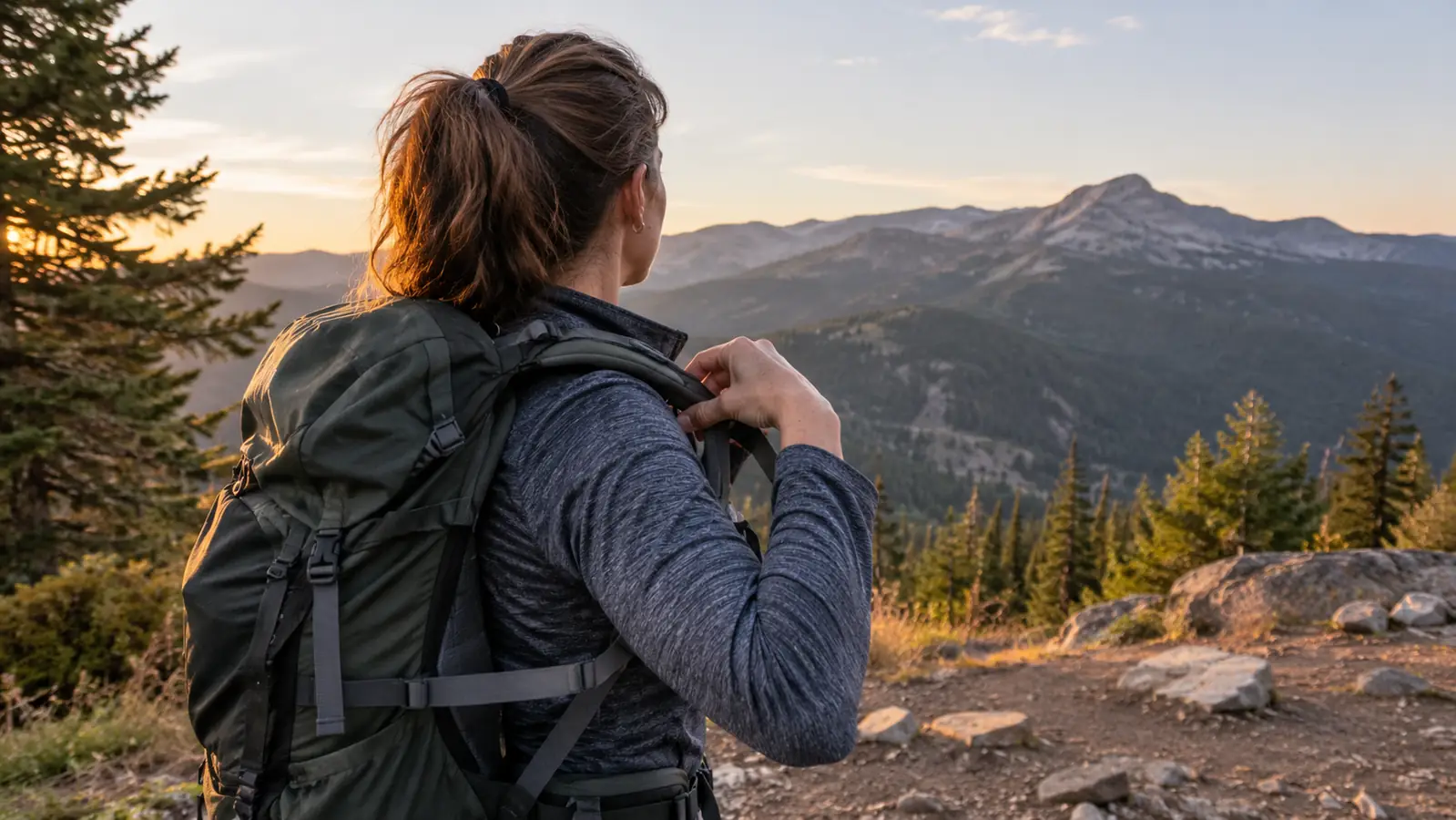
The third thing is the one I tell every new hiker, and the one Tom has heard often enough that he finishes the sentence for me: a pack that fits is a pack that feels lighter. The Renn 50 fits me well once the suspension is set, and that does more for comfort than any amount of clever packing. Packing order matters. Fit matters more. Do both, and you will wonder why you ever dreaded the first mile.
What Else Helps
A pack is only half the system. The things I carry with it matter just as much. My Merrell Moab 3 Mid boots have carried me through about 300 trail miles this season, and my Darn Tough socks have kept my feet blister-free since I switched. My Black Diamond Trail poles come out on any hike over about five miles. My left knee gets sore on long descents, and the poles take the edge off.
For water on overnight trips, I carry the Sawyer Mini. I filter from streams and springs, and I backflush it after every trip with the included plunger. A hollow fiber filter does not remove viruses or chemicals, so I am picky about where I fill it. On a long day, I keep it somewhere I can reach without unloading the pack.
The other thing that helps is a routine. I pack the Renn 50 in the same order every time. After the overnight shakedown in May and three trips since, I can load it in about ten minutes without thinking. Routine means I never leave the stove at home and never unpack the whole pack to find the sunscreen. When the routine is second nature, packing stops being a chore and becomes part of the trip.
The first time I loaded the Renn 50, I fought it all day. Once the heavy stuff sat up against my back, the same load felt ten pounds lighter.
That is the whole point of packing well. It does not make the miles shorter, but it makes them easier. The Renn 50 is a straightforward pack to live with: 50 liters, 3.5 pounds, seven pockets, an adjustable AirSpeed suspension, and a raincover that stows away when you do not need it. Give it ten minutes of attention at the car, and it will carry you well.
Let Your Hips Do the Work
The pack is not the hard part. The packing is. The Osprey Renn 50 gives you an adjustable suspension, seven pockets, and a raincover that stows away. Spend ten minutes loading it the right way, and your hips will thank you at the end of the day.
Amazon Check Today's Price on Amazon →