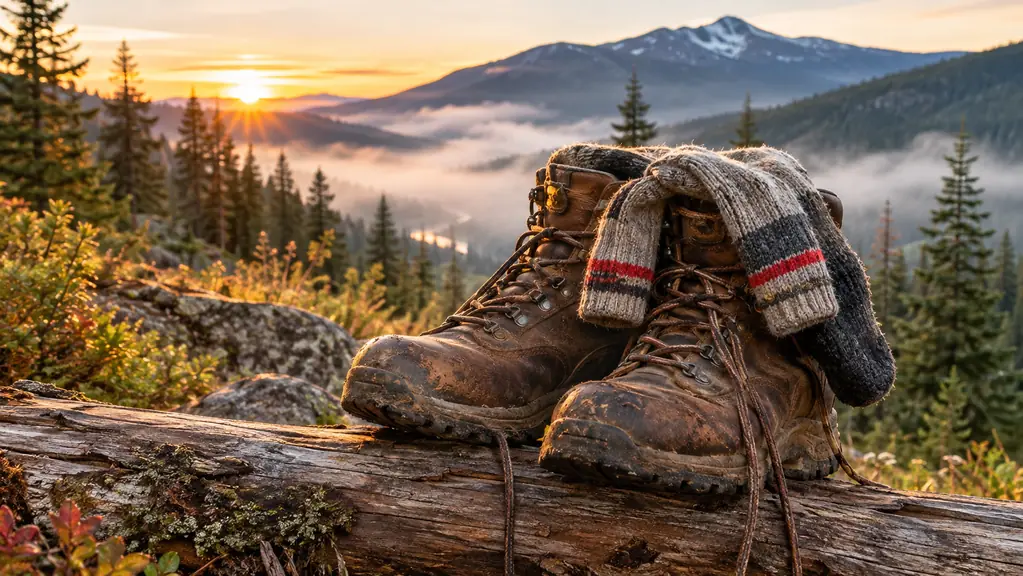
By the end of last summer, I had a drawer full of hiking socks that looked fine and felt like damp rags by mile four. I am Nell Brandvold, a retired middle school science teacher who lives outside Missoula, Montana, and I have been hiking for about thirty years. I do not buy gear on hype. I buy it, wear it, wash it, and let the trail decide. So when I finally ordered three pairs of Darn Tough Vermont Women's Hiker Micro Crew Midweight Hiking Socks in the first week of April this year, I did not expect much beyond a decent sock. What I got was a pair of socks that outlasted every other piece of my kit through a full season of hiking.
These are the socks I reached for on every single hike from April through October, about 300 trail miles total. My left knee gets sore on long descents, so I pay attention to what is on my feet. I wanted to know whether the merino wool blend actually keeps feet comfortable on a hot afternoon, whether the fit stays put inside a boot, and whether a sock can really go a full season without losing its shape. This review covers all of that, including the parts I did not like.
The Quick Verdict
The most comfortable hiking sock I have worn in thirty years of hiking, with a fit that stays put and a merino blend that handles heat and cold. They cost more than a bargain pack, and hand washing is a chore, but I have not had a single blister since I switched.
Amazon Check Today's Price →The socks I have worn on every hike for seven months
Three pairs of Darn Tough Vermont Hiker Micro Crew socks carried me through about 300 trail miles this season with no blisters and no lost shape. If you are tired of socks that go limp by August, this is the pair to start with.
Amazon Check Today's Price on Amazon →How I've Used It
I bought three pairs at once, which turned out to be the right call. They arrived in the first week of April, and I wore the first pair on a short walk near home the same day. For the first two weeks I kept them for easy trails, then I trusted them on longer days. By May I was wearing them for everything, including an overnight shakedown trip with my Osprey Renn 50. Tom, my husband, hikes with me on most trips, and he switched to his own wool socks after watching mine come through a wet day without that cold, soggy feeling.
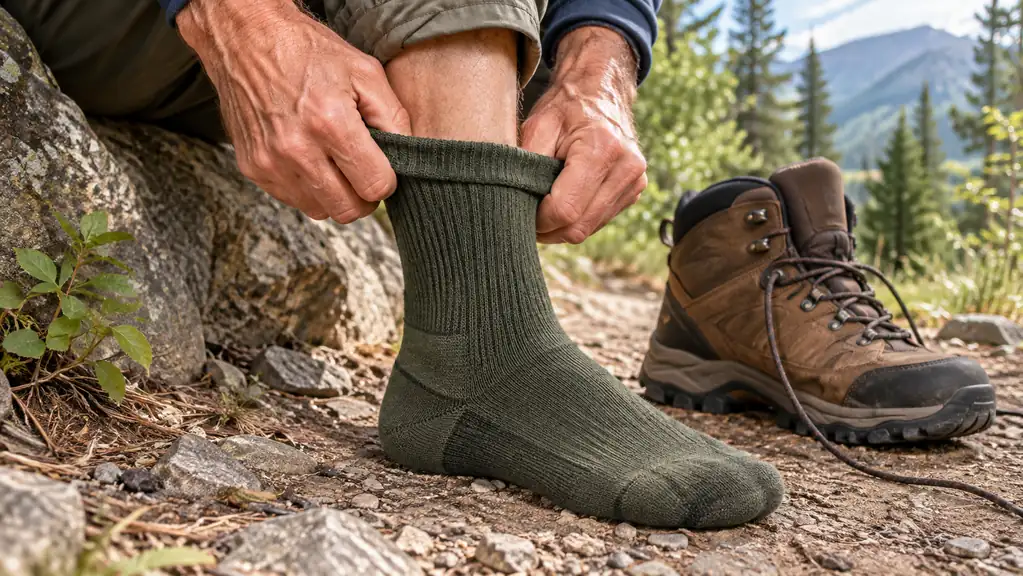
The socks are a micro crew height, which means they come up just above the ankle bone. That is the height I prefer with my Merrell Moab 3 Mid boots because there is no bunching at the top of the boot. The fabric is a medium weight with medium stretch, and the fit is snug without being tight. I wear a women's size 9 with a slightly wide forefoot, and the stretch fit has never pinched or slid down on me.
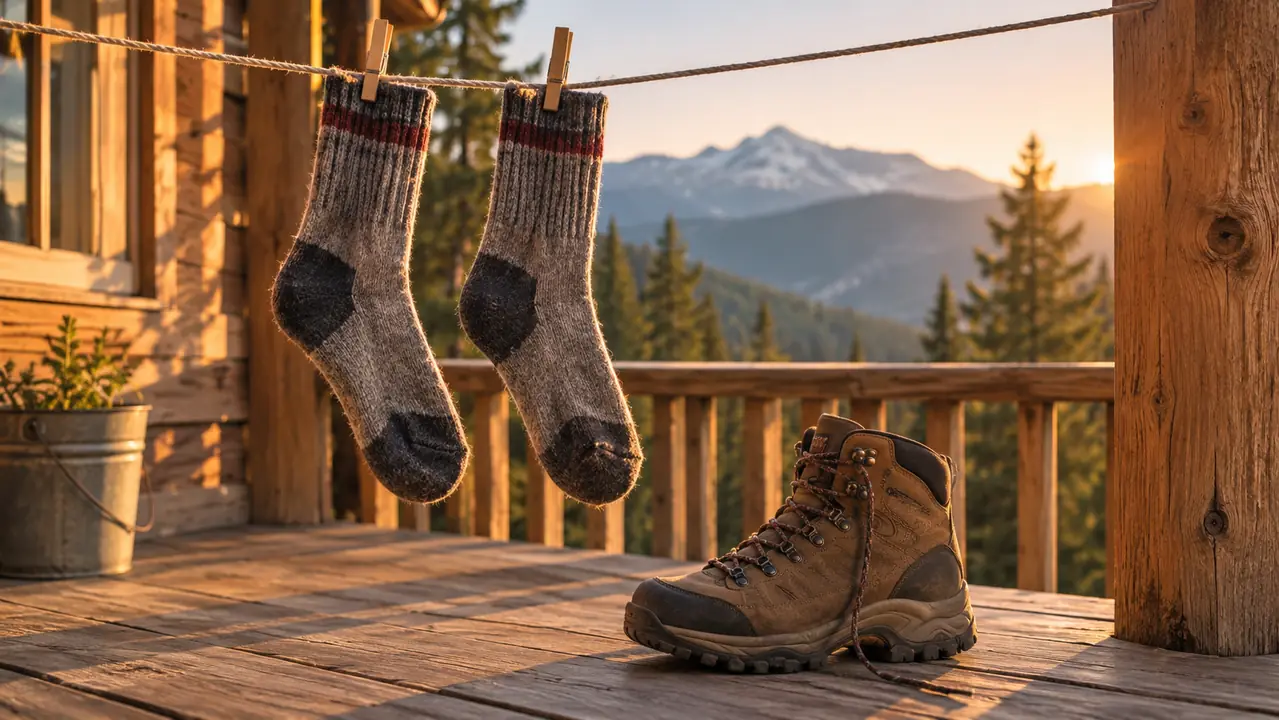
I rotated three pairs across the whole season, which meant each pair got worn about every third hike and then washed. Hand washing is the one part I did not love, and I will be honest about that later. But the routine was simple: warm water, a little wool wash, squeeze, lay flat to dry. They dried overnight every time.
What Makes the Darn Tough Vermont Hiker Different
The short version is the fabric. These are 58% merino wool, 40% nylon, and 2% elastane. Merino wool is the reason they do not feel like wet rags at mile four. Wool pulls moisture away from your skin and keeps working even when it is damp, which is exactly what you want on a trail where the afternoon sun disappears behind a ridge and the temperature drops twenty degrees.
The nylon is what makes them last. A pure wool sock will wear through at the heel in a season. The nylon content adds toughness where the boot rubs, and the 2% elastane gives the sock its stretch fit. The result is a sock that feels soft against the skin but holds its shape around the foot. After seven months, mine still hug my arch the way they did in April.
They are also made in the USA, which matters to me as a practical detail, not a slogan. The style number is 1903, and the care instructions say hand wash only. I will admit I was skeptical about a hand-wash sock for hiking. But the wash routine takes two minutes, and the payoff is a sock that has not stretched out, pilled, or gone thin at the heel.
How They Held Up Over the Season
The honest headline is this: I have not had a single blister since I switched, and that is about 300 miles of trail. I have a slightly wide forefoot and a left knee that gets sore on long descents, so I am exactly the person who notices when a sock bunches or rubs. These did not bunch. They did not slide. The seam at the toe never once bothered me.
The hike that convinced me was a nine-mile day in June with a stream crossing that soaked my boots in the first hour. I kept waiting for the misery to start, the way it always did with my old socks. It never did. My feet stayed warm, the socks stayed put, and I finished the day with no hot spots at all. That was the hike I stopped thinking about my feet entirely, which is the highest compliment a sock can earn.
The other thing I noticed was temperature. On a hot July afternoon, my feet did not feel like they were cooking inside my boots. On a cool October morning, they were not cold at the trailhead. I think that is the merino doing its job, and it is the reason these became my year-round sock rather than a three-season one.
Wear and tear has been minimal. The heels and toes, the two places I expected to see wear, still look like new. The elastic around the arch has not gone baggy. I have one small complaint: the cuffs of two pairs have fuzzed up slightly where they rub against the top of my boot, nothing that affects how they wear, but it is there if you look closely.
The Tradeoffs Nobody Mentions
First, the hand wash only instruction is real. I tried machine washing one pair on a gentle cycle in a mesh bag because I was curious, and the socks came out fine, but I am not going to tell you to do that. The manufacturer says hand wash only, and the wool blend is too nice to risk. If you are the kind of hiker who throws everything in the washer and calls it done, this is a genuine downside.
Second, the fit is snug. The stretch fit is meant to hug your foot, and most people will like that. If you prefer a loose, roomy sock with extra wiggle room for your toes, this may feel more fitted than you expect. I wear a size 9 with a slightly wide forefoot and they fit me perfectly, but I would not size down.
Third, they are a midweight sock, not a heavyweight one. On a bitter winter day or an overnight trip where the temperature drops below freezing, I would want a heavier sock or a liner underneath. For the three-season hiking I do in Montana, from May to October, the medium weight is exactly right.
One more honest note: these socks are not magic. If your boots do not fit, no sock will save you. I wear a women's size 9 with a slightly wide forefoot, and my Merrell Moab 3 Mid boots fit well, so the socks had a fair chance. If you are hiking in boots that are too big or too small, you will get blisters no matter what is on your feet. The sock can only do its part.
What I Liked
- No blisters in about 300 miles of trail use
- Merino blend keeps feet comfortable in heat and cold
- Stretch fit stays put inside boots all day
- Still holds its shape after seven months of rotation
- Made in the USA
Where It Falls Short
- Hand wash only, which is a real chore after a muddy hike
- Snug fit is not for hikers who want a loose, roomy sock
- Midweight is not warm enough for bitter winter days
The moment I knew these socks were different came on a wet June day when my boots were soaked and my feet stayed warm. That is not something I can say about any sock I wore in the thirty years before.
Alternatives I Considered
The comparison I hear most often is Darn Tough Vermont versus Smartwool, and there is a fuller comparison on this site if you want the details. I have a hiking friend who wears Smartwool, and I have handled her pairs and read the published specs. The Smartwool socks are comfortable and well made, and the cushioning is a little plusher out of the box. What tipped me toward Darn Tough Vermont was the fit. The stretch fit holds my foot more securely, and I have never had to pull them up mid-hike.
I also considered just buying cheaper socks in bulk, which is what I did for years. The math never worked out for me. A bargain sock would go thin by August, and I would replace them twice a season. These three pairs have carried me the entire season with no sign of quitting. I cannot tell you what they cost today, because prices change, but I can tell you I have stopped shopping for socks entirely.
I will also say this plainly: I have never owned a pair of Smartwool socks, so I am not going to pretend I can compare them year after year. What I can tell you is what I saw in my friend's pair and what the published specs say. If you already love Smartwool, keep buying them. I am not here to talk anyone out of a sock that works.
Merino Versus Cotton, in Plain Terms
If you are new to wool socks, the difference from cotton is the whole story. Cotton soaks up sweat and holds it against your skin, which is why a cotton sock feels clammy by the second mile and cold the moment you stop moving. Merino wool does the opposite. It pulls moisture away from the foot and keeps insulating even when it is damp. On a long descent, when my left knee is complaining and I am trying not to think about the last two miles, the last thing I need is wet fabric rubbing my heel. These socks simply do not do that.
I have a longer piece on this site about why merino hiking socks beat cotton, if you want the full argument. The short version is that I used to think a sock was a sock, and I spent years buying cotton blends because they were cheap. I stopped doing that the summer I wore through three pairs of cotton socks on three consecutive hikes. The Darn Tough Vermont pair is the reason I do not shop for socks anymore.
Who This Is For
These socks are for the hiker who is tired of replacing socks every season and tired of peeling off damp, bunched-up fabric at the end of a long day. If you hike most weekends from spring through fall, if you wear a boot that fits snugly, and if you would rather buy three good pairs than six mediocre ones, the Darn Tough Vermont Hiker Micro Crew is worth a serious look. They suit day hikes and short backpacking trips alike, and they have become the only sock I pack for an overnight with the Osprey Renn 50.
Who Should Skip It
Skip these if you refuse to hand wash anything, because the care instruction is not a suggestion. Skip them if you want a thick, plush sock for below-freezing winter hikes, because this is a midweight, not an expedition sock. And skip them if you prefer a loose, roomy fit with lots of toe wiggle room, because the stretch fit is deliberately snug. None of that makes the sock bad. It just means it is not the sock for you, and there is no shame in knowing that before you buy.
Seven months and 300 miles, and I would buy them again tomorrow
If you hike regularly and you are tired of socks that go limp by August, the Darn Tough Vermont Hiker Micro Crew is the pair I reach for every single time. Today's price is the only thing I cannot predict, but the fit, the fabric, and the durability I can vouch for personally.
Amazon Check Today's Price on Amazon →