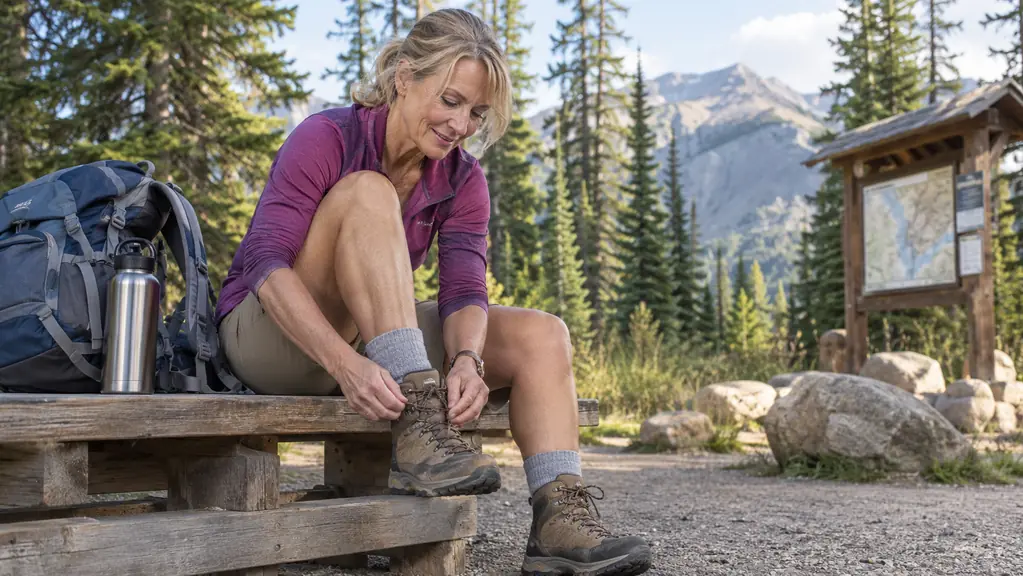
I hiked in cotton socks for the better part of thirty years, because that is what was in the drawer. Then, this April, I retired my old pairs and bought three pairs of Darn Tough Vermont Hiker Micro Crew socks, the women's version, and rotated them through a full season of day hikes and backpacking trips. Somewhere around 300 miles in, I stopped thinking about my feet entirely. That is the whole argument for merino in one sentence.
Cotton is fine for a walk to the mailbox. On a trail, it holds sweat against your skin, goes cold when it is wet, and bunches up in ways that turn into blisters. Merino wool does the opposite. Here are ten reasons I would not go back, in the order I noticed them.
The socks that ended a 30-year habit
Three pairs of Darn Tough Vermont Hiker Micro Crew socks have carried me through about 300 trail miles this season, and I have not had a single blister since I switched. If your feet are the first thing to complain on a hike, this is the pair to try.
Amazon Check Today's Price on Amazon →Cotton soaks up sweat. Merino moves it off your skin.
A cotton sock holds moisture right where it lands, against your foot, and that is how you end up with a wet sock by the first mile. The 58% merino wool in the Darn Tough Vermont Hiker Micro Crew pulls moisture away from your skin so it can evaporate. On a warm September climb, my old cotton socks were soaked through by the first switchback. The merino pair stayed comfortable to the top.
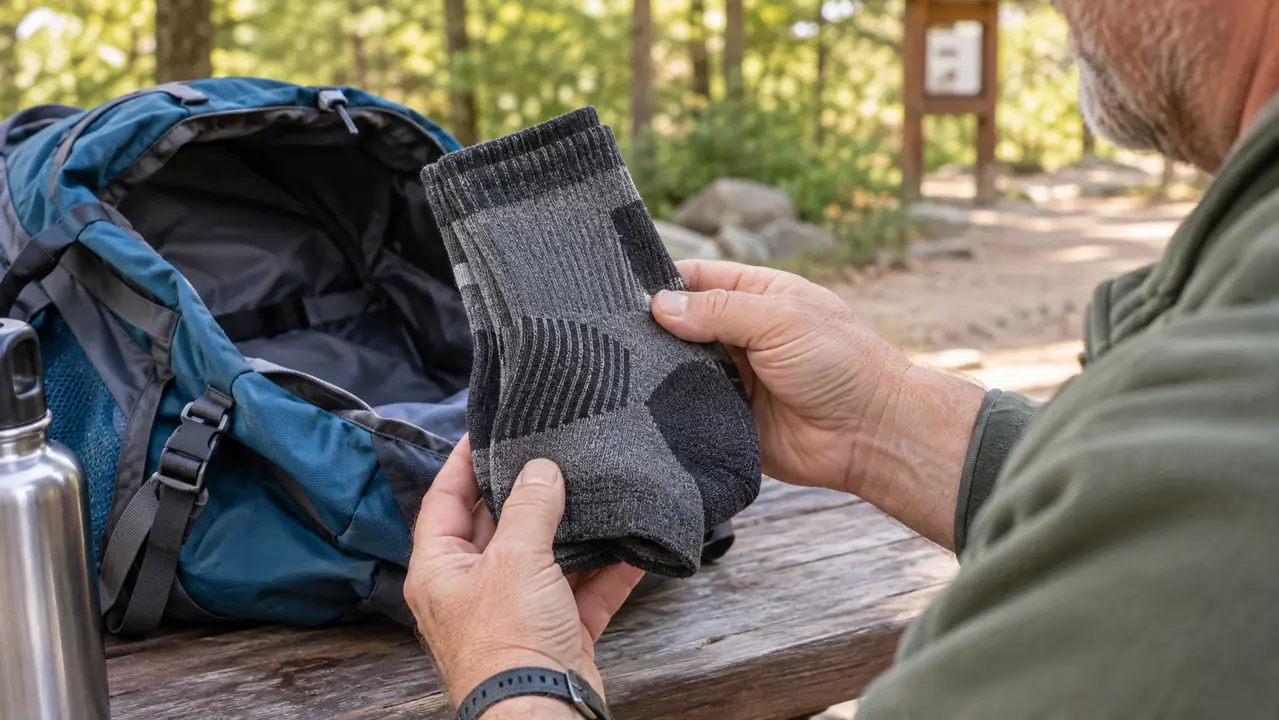
Wet wool still keeps you warm. Wet cotton does not.
Cotton loses almost all its insulation once it is wet, which is a problem on a trail with creek crossings or afternoon rain. Wool keeps insulating even when it is damp. I crossed a creek in June and hiked the next two hours in damp merino without the cold creep I used to get from cotton. That one afternoon is reason enough for me.
It breathes in July heat instead of trapping it.
Merino is not a winter fabric, and that surprised me. The medium weight of these socks breathes well enough for an 80-degree day hike, but it is also warm enough for a chilly October morning. One pair carried me from May to October, which is why I stopped owning separate summer and winter socks. On the hottest days I still reach for the same pair, which I never could have said about cotton.
The blend is built to survive a season of miles.
Merino alone would wear through fast, which is why the Darn Tough Vermont Hiker Micro Crew is 58% merino wool, 40% nylon, and 2% elastane. The nylon takes the abrasion from boots and trail grit, and the elastane keeps the sock from sagging. After about 300 miles and a season of hand washing, mine still hold their shape. That is more than I can say for most socks I have owned.
Medium cushioning is the right amount for rocky tread.
These are listed as medium weight, and that is the Goldilocks spot for me. There is enough padding to take the sting out of rocky sections, but not so much that my boots feel tight. I wear a women's size 9 with a slightly wide forefoot, and they fit inside my Merrell Moab 3 Mid boots without bunching or slipping. I have never had to stop and adjust them mid-hike, which is more than I can say for any sock I wore before.
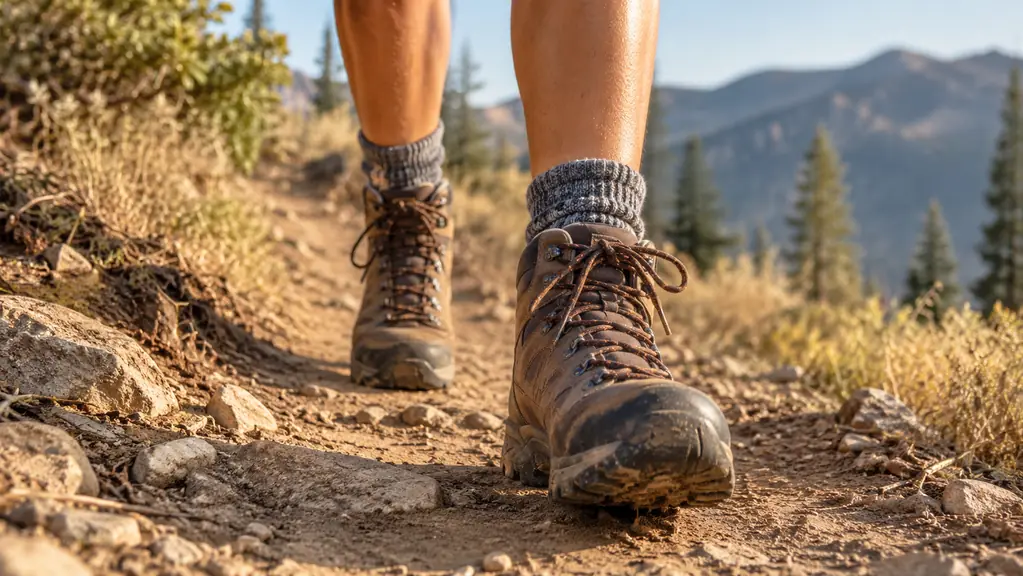
The micro crew height keeps trail grit out of your boots.
I used to wear low-cut socks and spend half of every hike stopping to dump pebbles out of my boots. The micro crew height on these comes up above the ankle, so dirt and grit stay out, without feeling like a tall sock. It is a small thing until you are on a switchback and you do not have to stop. I notice it on every hike.
They dry overnight, which matters on a multi-day trip.
The care instructions say hand wash only, and I follow that: a quick wash in a sink, a gentle squeeze, and they hang from my pack. On my overnight trips with the Osprey Renn 50, I wash a pair in the evening and it is dry enough to wear the next morning. That means I carry two pairs for a three-night trip instead of four. Less weight, less bulk.
Made in the USA, and the stitching has held up.
The listing says Made in the USA, and for me that has translated into flat seams that do not rub. Seams are where blisters start, and these have stayed put through a full season. I have worn out a lot of socks over thirty years of hiking, and the difference is usually visible in the first few washes. These looked the same in October as they did in April.
The stretch fit stays put on long descents.
My left knee gets sore on long descents, so I pay attention to my feet on the way down. Socks that bunch up under the heel are a fast way to get a blister, and these do not move. The stretch fit and pull-on design keep them snug without feeling tight. On the descents where I am already working to keep my knee happy, it helps to not also be thinking about my socks.
No blisters in about 300 miles. That is the whole story.
I bought three pairs in the first week of April and rotated them through the season: day hikes most weeks, plus a few overnight trips. No blisters. Not one. I used to treat blister bandages as standard hiking gear, and now I do not carry them. If you hike in cotton and your feet are the first thing to complain, this is the reason to switch.
What I'd Skip
Merino is not magic, and I would not pretend otherwise. If you only hike a couple of times a year on easy, dry trails, your cotton socks are probably fine and you do not need to spend the money. I also would not recommend these for people who want a sock they can toss in the dryer without thinking; the hand wash instruction is real, and ignoring it will shorten their life. And if your boots fit poorly, no sock on earth will fix that. Socks are the last thing I upgrade, not the first. And if you are happy with what you have, there is no rule that says you have to change.
About 300 trail miles in Darn Tough Vermont Hiker Micro Crew socks, and not a single blister since I switched.
One less thing to think about on the trail
If you have ever finished a hike with sore, damp feet, merino is worth a try. Three pairs of Darn Tough Vermont Hiker Micro Crew socks have carried me through a full season, and I would not go back to cotton. Check today's price and see if they work for you.
Amazon Check Today's Price on Amazon →